












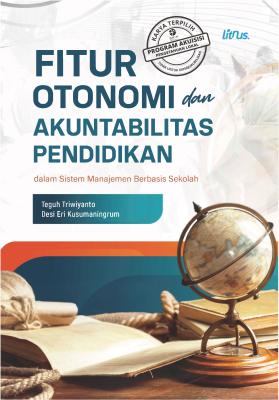
Pendidikan merupakan media utama untuk meningkatkan kemampuan sumber daya manusia. Kemajuan suatu bangsa dapat dicapai bila didukung dengan sumber daya manusia yang mumpuni. Sumber daya manusia yang mumpuni hanya dapat dilahirkan melalui proses pendidikan yang bermutu, dan pendidikan yang bermutu hanya dapat dicapai secara maksimal bila setiap satuan pendidikan dapat melaksanakan proses pendidikan yang bermutu. Untuk itu, ada tiga sisi yang berpengaruh terhadap pelaksanaan pendidikan yang bermutu, yaitu pembelajaran, pembimbingan, dan manajemen pendidikan. Melalui proses pembelajaran dan pembimbingan yang bermutu dapat menghasilkan belajar yang optimal. Proses pembelajaran dan pembimbingan dapat dilaksanakan secara bermutu bila didukung dengan manajemen pendidikan yang efektif.
Buku ini membantu Anda untuk memahami dan menuntun ke arah keterampilan manajemen pendidikan, teknik manajemen pendidikan, standar nasional pendidikan, akreditasi sekolah, pengertian, tujuan, dampak, dan praktik manajemen berbasis sekolah (MBS), komponen MBS, perencanaan, pelaksanaan, pengawasan dan evaluasi MBS, kepemimpinan dalam MBS, peran serta masyarakat dalam MBS, dan akuntabilitas MBS. Selain itu, dikenalkan pelbagai teknik manajemen pendidikan, diantaranya Quality Control (QC) atau Qualty Control Circle (QCC), Quality Assurance (QA), Total Quality Qontrol (TQC), Deming, Juran, Crosby, Peters, Ishikawa, Malcom Baldridge Award, European Quality Award, Internasional Standard Organization (ISO) 9000, dan Total Quality Management (TQM).
Bagi Anda mahasiswa sarjana dan pascasarjana bidang pendidikan, terutama manajemen pendidikan, buku ini memberikan bekal teori dan praktik manajemen institusi pendidikan. Untuk praktisi pendidikan: guru, dosen, kepala sekolah, pengawas, komite sekolah, pengambil kebijakan pendidikan, dan peminat masalah pendidikan, buku ini memberikan perspektif manajemen pendidikan yang otonom dan akuntabel.
Abd. Rahim, Romle. (2014). An examination of quality management practices, human-oriented elements, and organizational performance in the Malaysian higher education institutions. PhD. Thesis. Universiti Utara Malaysia.
Abu-Duhou, I. (1999). School-based management. Paris: UNESCO, IIEP.
Adams, C.M., & Marie, G.J. (2011). A diffusion approach to study leadership reform.
Journal of Educational Administration, 49(4), 354-362.
Adams, D. (1991). Planning models and paradigms, in R. V. Carlton & G. Awkerman (eds.) Educational planning: Concepts, strategies and practices. New York: Longman.
Adelstein, Richard. (2021). Economics not engineering. Journal of Industrial and Business Economics, 48 (1), 573–579.
Agbo, S.A. (2007). Addressing school-community relations in a cross-cultural context: a collaborative action to bridge the gap between first nations and the school. Journal of Research in Rural Education, 22(8), 1-14.
Agoes, S. (2012). Auditing petunjuk praktis pemeriksaan akuntan oleh akuntan publik.
Jakarta: Salemba Empat.
Agrawal, N. (2019). A framework for Crosby’s quality principles using ISM and MICMAC approaches. The TQM Journal, 32(2), 305-330.
Ahmed. M. (1975). The economic for nonformal education resources: Cost and benefit.
New York: Praeger Publishers.
Ali, Ibrahim A., & Abdalla, Mazin S. (2017). Educational management, educational administration and educational leadership: Definitions and general concepts. SAS Journal of Medicine (SASJM), 3(12), 326-329.
Allais, Stephanie Matseleng. (2017). Quality assurance in education. Johannesburg: Centre for Education Policy Development.
Alstete, J.W. (2007). A brief history of college accreditation. In: college accreditation: managing internal revitalization and public respect. Palgrave New York: Macmillan.
Amalia, Arfan Bakhtiar., Adrianto, David., & Harrani., Konstantia. (2008). Analisis perbandingan penghargaan mutu Malcolm Baldrige National Quality Award dengan European Quality Award (MBNQA vs EQA). J@Ti Undip, 3(2), 131-141.
Amalia, F. (2012). Pengaruh pendidikan, pengangguran dan inflasi terhadap tingkat kemiskinan di Kawasan Timur Indonesia (KTI) periode 2001-2010. Econo Sains, 10(2), 12-23.
Androniceanu, A., & Ristea, B., (2014). Decision making process in the decentralized educational system. Procedia – Social and Behavioral Sciences, 149(1), 37–42.
Androniceanu, A., Ristea, B., & Uda, M.M. (2015). Leadership competencies for project based school management success. Procedia–Social and Behavioral Sciences, 182(13), 232-238.
Angelle, P.S. (2017). Beliefs and behaviors of two high school principals in developing a sense of school community for students. Health Education, 101(1), 5-22.
Anshori, A.H. (2016). Pentingnya manajemen berbasis sekolah dalam kepemimpinan sekolah efektif. Tarbawi, 2(01): 23-28.
Arar, K., & Romi, A.A. (2016). School-Based management: Arab education system in Israel. Journal of Educational Administration, 54(2), 191-208.
Arismunandar. (2013). Peran serta masyarakat melalui MBS dalam menyukseskan Kurikulum 2013. Disajikan pada Seminar Evaluasi dan Program Tindak Lanjut Bimtek MBS di SD, Hotel Golden Tulip Galaxy, Banjarmasin, 29 Oktober sd. 1 November 2014
Arunatilake, N., & Jayawardena, A. (2010). Formula funding and decentralized management of schools—has it improved resource allocation in schools in Sri Lanka? International Journal of Educational Development, 30(1), 44-53.
Bafadal, Ibrahim. (2008). Manajemen sarana dan prasarana sekolah. Jakarta: Bumi Aksara.
Bakry, A. (2010). Kebijakan pendidikan sebagai kebijakan publik. Jurnal Medtek, 2(1), 1-13.
Bandur, Agustinus. (2012). School-based management developments and partnership: Evidence from Indonesia. International Journal of Educational Development, 32(2), 316-328.
Bandur, Agustinus. (2018). Stakeholders responses to school-based management in Indonesia. International Journal of Educational Management, 32(6), 1082-1098.
Banerjee, A.V., R. Banerji, E. Duflo, R. Glennerster., & Khemani S. (2010). Pitfalls of participatory programs: evidence from a randomized evaluation in education in India. American Economic Journal: Economic Policy, 2(1), 1-30.
Bappenas. (2011). Kajian strategi pendanaan pendidikan tinggi. Jakarta: Bappenas.
Beare, H., Caldwell, B. J., & Millikan, R. H. (2018). Creating an excellent school: Some new management techniques. Routledge.
Beidokhti, A. A., Fathi, K., & Moradi, S. (2016). The structural relations of parameters of school-based management based on decentralization, responsibility, participation, organizational culture, and organizational commitment. Review of European Studies, 8(2), 159-170.
Bell, L. (2002). Strategic planning and school management: full of sound and fury, signifying nothing? Journal of Educational Administration, 40(5), 407-424.
Best M, Neuhauser D. (2008). Kaoru Ishikawa: from fishbones to world peace. BMJ Quality & Safety, 17(2), 150-152.
Billaiya, R., Malaiya, S., & Parihar, K. S. (2017). Impact of socio economic trends on students in quality education system. International Journal of Social Sciences and Humanities, 1(1), 16-20.
Bisgaard, Soren (2008). Quality Management and Juran’s Legacy. Quality engineering, 20(4), 390-401.
Blaug. M. (1972). An introduction to the economics of education. London: Penguin Books.
Blazar, D., & Kraft, M. A. (2016). Teacher and teaching effects on student attitudes and behaviors. Educational Evaluation and Policy Analysis, 39(1), 146-170.
Blimpo, M. P., & Evans, D. K. (2011). School-based management and educational outcomes: lessons from a randomized field experiment. http://siteresources.worldbank.org/ EDUCATION/Resources/Blimpo-Evans_WSD-2012-01-12.pdf.
Blumberg, A., & Greenfield, W. (2002).The effective principal: perspectives on school leadership. 3th Edition. Boston: Allyn and Bacon, Inc.
Bo we, R., & Ball, S. (1992). Reforming education and changing schools: Case studies in policy sociology. London: Routledge.
Boediono., Walter W. McMahon., & Don Adms, (Eds.). (1992). Education, economic, and social development. Jakarta: Ministry Of Education and Culture.
Bolam, R. (1999). Educational administration, leadership and management: towards a research agenda. Educational Management.
Bourn, S.J. (2007). Public sector auditing: is it value for money? John Wiley & Sons Ltd.
Briggs, K., & Wohlstetter, P. (1999). Key elements of a successful school-based management strategy. Working Paper, University of Southern California.
Brown, D., (1990). Decentralisation and school-based management. London: Falmer Press.
Bryk, T., Thum, Y., Easton, J., & Luppescu, S. (1998). Charting Chicago school reform.
Boulder: CO, Westview Press.
Budiman. A. (1995). Teori pembangunan dunia ketiga. Jakarta: Gramedia.
Bush, T. (2010). Theories of educational leadership and management (4 ed.): Sage. Bush, T. (2011). Theories of educational leadership and management: Sage.
Cahyana, A. (2010). Upaya peningkatan mutu sekolah melalui satuan otonomi pendidikan. Jurnal Pendidikan dan Kebudayaan, 16(2), 109-117.
Caldwell, B. J., & Spinks, J. M. (1988). The self-managing school. London: Falmer Press. Caldwell, B. J., & Spinks, J. M. (1992). Leading the self-managing school. London: Falmer
Press.
Caldwell, B. J., & Spinks, J. M. (1998). Beyong the self-managing school. London: Falmer. Caldwell, Brian, J. (2005). School-based management. Paris: UNESCO.
Cambridge Assessment International Education. (2009). The Cambridge approach: principles for designing, administering and evaluating assessment. www. cambridgeassessment.org.uk/Images/109848-cambridge-approach.pdf
Campbell, C.A., Howard, D., Rayford, B S., & Gordon, D.M. (2015). Fathers matter: involving and engaging fathers in the child welfare system process. Children and Youth Services Review, 53(6), 84-91.
Candoli, I.C. (1995). Site-based management in education: how to make it work in your school. Lancaster: Technomic Publishing Co.
Capowski, G. (1994). Anatomy of a leader: where are the leader of tomorrow?
Management Review, 83 (3), 10-18.
Carvalho, A. V., Enrique, D. V., Chouchene, A., & Charrua-Santos, F. (2021). Quality 4.0: An Overview. Procedia Computer Science, 181, 341–346. https://doi.org/10.1016/j. procs.2021.01.176
Casner-Lotto, J. (1988). Expanding the teacher’s role, Hammond’s school improvement process. Phi Delta Kappa, 69(1), 349-353.
Chairunnisa, C. (2013). Kepemimpinan, sistem dan struktur organisasi, lingkungan fisik, dan keefektifan organisasi sekolah. Jurnal Ilmu Pendidikan, 19(1), 56-60.
Chambers, A., & Rand, G. (1997). The operational auditing handbook: auditing business processes. A Ronald Press Press Publications: John Wiley & Sons.
Chann, A. (2016). Popularity of the decentralization reform and its effects on the quality of education. Prospects Comparative Journal of Curriculum, Learning, and Assessment, 46(1), 131–147.
Cheng, Alison Lai-Fong. (2004). School-based management and quality management in Hong Kong primary schools. Thesis Doctor. University of Leicester.
Cheng, C. K. (2008). Management practices for promoting shared decision-making in school organization. KEDI Journal of Educational Policy, 5(2), 63-88.
Cheng, E.C.K. (2017). Managing school-based professional development activities.
International Journal of Educational Management, 31(4), 445-454.
Chubb, J. E., & Moe, T. (1990). Politics, markets and America’s schools. Washinghon DC: Brookings Institution.
Chudgar, A., Chandra, M., & Razzaque, A. (2014). Alternative forms of teacher hiring in developing countries and its implications: a review of literature. Teaching and Teacher Education, 37 (1), 150-161.
Coates, Hamish. (2005).The value of student engagement for higher education quality assurance. Quality in Higher Education, 11(1), 25-36.
Cohn, E. (1978). The economics of education. Revised Edition, Cambridge: Mass Ballinger Publising Co.
Commonwealth Secretariat (2017). Universal standards for quality in education to enable the delivery of sustainable development goals 2030. The Commonwealth Accelerated Mechanism for Education (CADME).
Coombs, H. P., & Manzoor, A. (1980). Memerangi kemiskinan di pedesaan melalui pendidikan non-formal. Jakarta: YIIS.
Coombs, H. Philip., & Hallak, Jaques. (1987). Cost analysis in education a toll for policy and planning, Baltimore and London: The John Hopkins University Press.
Cowan, C. A. (2013). An exploration of significant leadership development factors in action learning: A comparison of three action learning programs. In ProQuest LLC. ProQuest LLC.
Creswell, J. (2015). Riset pendidikan perencanaan, pelaksanaan, dan evaluasi riset kualitatif dan kuantitatif. Yogyakarta: Pustaka Pelajar.
Crosby, P. B. (1979). Quality is free: the art of making quality certain. New York: McGraw-Hill.
Crosby, P. B. (1980). Quality is free. Penguin.
Crosby, P. B. (1984). Quality without tears. Maidenhead: McGraw-Hill
Crosby, P. B. (1988). The externally successful organization. New York: McGrawHill. Dahari, Zainurin Bin., & Ya, Mohd Sabri bin. (2011). Factors that influence parents’
choice of pre-schools education in Malaysia: an exploratory study. International
Journal of Business and Social Science, 2(15), 115-128.
Danim, S. (2010). Otonomi manajemen sekolah. Bandung: Alfabeta.
Darinskaya, L., Moskvicheva, N., & Molodtsova, G. (2015). Training program as a means of improving effectiveness of pedagogical communication. Procedia–Social and Behavioral Sciences, 171(16), 569-575.
Darmaningtyas., Subkhan, E., & Panimbang, F. (2014). Melawan liberalisme pendidikan.
Malang: Madani.
Daud, K. (2015). The Implementation of school based management policy: an exploration. Procedia–Social and Behavioral Sciences, 172(1), 693–700.
David, J. L. (1989). Synthesis of research on school-based management. Educational Leadership, 46(8), 45-53.
Davies, B., & Ellison, L. (1992).Teachers perceptions of school quality and effectiveness: improving schools using staff attitude surveys. The International Journal of Educational Management, 11(5), 222–229.
Dekawati, I. (2011). Manajemen perkembangan guru. Jurnal Cakrawala Pendidikan, 30(2), 203-215.
Deming, W. E. (2000). The new economics: For industry, government, education (2nd edition). MIT Press.
Depdiknas. (2000). Program Manajemen Berbasis Sekolah: Konsep Pelaksanaan, Perencanaan, Monitoring, Evaluasi, Dan Supervisi. Jakarta: Depdiknas, UNESCO, UNICEF, NZAID.
Dessler, Gari. (2015). Manajemen sumber daya manusia. Jakarta: Salemba Empat.
Dewi, R. (2013). Kinerja kepala sekolah: Pengaruh kepemimpinan transformasional konflik dan efikasi diri. Jurnal Ilmu Pendidikan, 19(1), 150-166.
Din, B., Anuar, A.R., & Usman, M. (2016). The effectiveness of the entrepreneurship education program in upgrading entrepreneurial skills among public university students. Procedia–Social and Behavioral Sciences, 224(15), 117-123.
Dionisio, C. S. (2018). A project manager’s book of tools and techniques. Wiley.
Direktorat Pembinaan Sekolah Dasar Kemdikbud. (2012). Materi bimtek manajemen berbasis sekolah. Jakarta: Kemdikbud
Donnelly, V.J., Óskarsdóttir, E., & Watkins, A. (Eds.). (2017). European agency for special needs and inclusive education. Decentralisation in education systems – seminar report. Denmark: Odense.
Drucker, P. F. (2019). Management cases. HarperCollins e-Book.
Drucker, Peter F. (1996). Your leadership is uniquegood news: there is no one leadership personality. Christianity Today International/Leadership Journal, 17(4), 54-76.
Drucker, Peter F. (2011).On leadership. Boston, Massachusetts: Harvard Business Review Press.
Drucker, Peter, F. (2002). Innovation and entrepreunership practice and principles. New York: Harper & Row, Publiser, Inc.
Eboatu, V., Ezeugbor, C., & Golu, J. (2018). Assessment of school-based management committees (SBMCS) physical and financial resources management functions in anaocha local government area, Nigeria. European Journal of Education Studies, 4(3), 215-226.
Engkoswara., & Komariah, Aan. (2010). Administrasi pendidikan. Bandung: Alfabeta.
Erskine, T.E. (2019). Examining the policies and strategies for implementing performance management systems at ada east district assembly. Thesis. University of Ghana.
Fanani, Z., Mardapi, D., & Wuradji, W. (2014). Model asesmen kepemimpinan pembelajaran kepala sekolah pendidikan dasar. Jurnal Penelitian dan Evaluasi Pendidikan, 18(1), 129-145.
Fattah, Nanang. (2002). Ekonomi dan pembiayaan pendidikan. Bandung: Remaja Rosdakarya.
Fattah, Nanang. (2008). Pembiayaan pendidikan: landasan teori dan studi empiris.
Jurnal Pendidikan Dasar, 9(4), 5-11.
Fayol, H. (2016). General and Industrial Management. Ravenio Books. Fayol, Henri. (2016). General and industrial management. Ravenio Books.
Feri, Rose., & Jusuf, Anwar. (2016). Tinjauan pustaka peningkatan mutu pendidikan kedokteran dan siklus pdca: plan -do -check –action. Jurnal Perpiki, 5(1), 17-22.
Fernet, C., Trépanier, S.G., Austin, S., & Côté, J.V. (2016). Committed, inspiring, and healthy teachers: how do school environment and motivational factors facilitate
optimal functioning at career start? Teaching and Teacher Education, 59(1), 481-491.
Ferrer-Estévez, M., & Chalmeta, R. (2021). Integrating Sustainable Development Goals in educational institutions. The International Journal of Management Education, 19(3), 1–19.
Fertig, M. (2007). International school accreditation: Between a rock and a hard place?
Journal of Research in International Education, 6(3), 333–348.
Fieger, P., & Villano, R.A. (2017). Two Dimensional efficiency measurements in vocational education: evidence from Australia. International Journal of Productivity and Performance Management, 66(2), 196-215.
Frank, W.T. (2007). Rethinking School and Community Relations in Hong Kong.
International Journal of Educational Management, 21(4), 350-366.
Gaertner, H., Wurster, S., & Pant, H. A. (2014). The effect of school inspections on school improvement. Journal School Effectiveness and School Improvement an International Journal of Research, Policy and Practice, 25(4), 489-508.
Ganimian, A. J. (2016). Why do some school-based management reforms survive while others are reversed? The cases of Honduras and Guatemala. International Journal of Educational Development, 47(1), 33-46.
Ghasemy, Majid., & Hussin, Sufean. (2014). Theories of educational management and leadership: a review. Conference: Seminar Kebangsaan Majlis Dekan-Dekan Pendidikan IPTA 2014At: University of Malaya, Malaysia.
Gil, L. (2013). Global politics and education systems: Towards education markets?
Journal of New Approaches in Educational Research (NAER Journal), 2(2), 95–101. Giles, C. (1995). School-based planning: Are UK schools grasping the strategic initiative.
International Journal of Educational Management, 9(4), 4-7.
Gomes, F. C. (2003). Manajemen sumber daya manusia. Yogyakarta: Andi.
GR.Knight. (1982). Issues and alternatives in educational philosophy. Michigan: Andrew University Press.
Grauwe, A. De. (2005). School-based management (SBM): Does it improve quality? New York: UNESCO
Grinerud, K., Aarseth, W. K., & Robertsen, R. (2021). Leadership strategies, management decisions and safety culture in road transport organizations. Research in Transportation Business & Management, 41(0). https://trid.trb.org/view/1856734
Hallinger, P. (2011). Leadership for Learning: Lesson from 40 years of Empirical Reseacrh. Journal of Educational Administration, 49(2), 125-134.
Hallinger, P., & Heck, R. H. (2011). Exploring the journey of school improvement: classifying and analyzing patterns of change in school improvement processes and learning outcomes. Journal School Effectiveness and School Improvement an International Journal of Research, Policy and Practice, 22(1), 1-27.
Hanafi, A., & Yuliani, I. (2006). Faktor-faktor yang memengaruhi kinerja guru matematika dalam pelaksanaan kurikulum berbasis kompetensi (KBK) pada Sekolah Menengah Atas Kota Palembang. Jurnal Bisnis dan Manajemen, 4(7), 24-31.
Hanafi, I., & Ma’sum, M. (2015). Analisis implementasi kebijakan pendidikan: peran komite sekolah pada sekolah menengah kejuruan. Cakrawala Pendidikan Jurnal Ilmiah Pendidikan, 34(1), 58-66.
Hargreaves, D., & Hopkins, D. (1991). The empowered school: The management and practice of school development planning. London: Cassell.
Hartono, W.F., & Rotinsulu, J.J. (2015). Pengaruh gaya kepemimpinan, komunikasi dan pembagian kerja terhadap kinerja karyawan pada PT. Prima Inti Citra Rasa Manado. Jurnal Riset Ekonomi, Manajemen, Bisnis dan Akuntansi, 3(2), 908-916. Haryono, Kir. (1994). Efisiensi internal STM Program Studi Mekanik Umum tahun ajaran 1987/1988-1991/1992 di Propinsi Jawa Tengah. Tesis, tidak diterbitkan, PPS IKIP
Jakarta di Yogyakarta.
Haynes, K., & Blomstedt, R. (1986). The principal and educational change, paper presented at a conference on teacher education. Dallas, Texas.
He, A.J., Lai, A., & Wu, X. (2016). Teaching Policy analysis in China and the United States: Implications for curriculum design of public policy programs. Policy and Society, 35(4), 385-396.
Helmold, M. (2022). Strategic performance management achieving long-term competitive advantage through performance excellence. Springer Nature.
Hemmerechts, K. (2017). Educational the relationship between parental literacy involvement, socio-economic status and reading literacy. Educational Review, 69(1), 85-101.
Herman, J. J., & Herman, J. L. (1993). School-based management: current thinking and practice. Illinois: Charles C Thomas.
Hernawan, A.H., & Cynthia, R. (2011). Pengertian, dimensi, fungsi, dan peranan kurikulum. Jakarta: Rajawali Press.
Hoskins, K., & Ilie, S. (2017). Widening participation to underrepresented and disadvantaged students: social identity and the barriers to higher education access in England, in bridges, pathways and transitions. England: Chandos Publishing.
Howlett, M. (2004). Beyond good and evil in policy implementation: instrument mixes, implementation styles, and second generation theories of policy instrument choice. Policy and Society, 23(2), 1-17.
Improving the Efficiency of Educational System (I.E.E.S). (1986). Indonesian education and human resources sector review, April 1986: Chapter II: Economic and financial analisis. Tallahassee: I.E.E.S.
Imron, Ali. (2011). Peranan kepala sekolah menengah pertama dalam implementasi manajemen berbasis sekolah. Jurnal Manajamen Pendidikan, 23(4), 357-356.
Imron, Ali., & Burhanuddin. Manajemen peserta didik. Dalam Imron, Ali, dkk (Eds.). (2003). Manajemen pendidikan analisis substantif dan aplikasinya dalam institusi pendidikan. Malang: Universitas Negeri Malang.
Ingemarson, M., Rubenson, B., Bodin, M., & Guldbrandsson, K. (2014). Implementation of a school-wide prevention programme-teachers’ and headmasters’ perceptions of organizational capacity. Evaluation and Program Planning, 43(4), 48-54.
International Organization for Standardization. (2015). Quality management principles.
Switzerland: ISO Central Secretariat.
Irianto., & Sa’ud. (2009). Desentralisasi sistem pendidikan nasional. Dalam tim dosen.
Manajemen pendidikan. Bandung: Tim Dosen UPI Bandung dan Alfabeta Ishikawa, Kaoru. (1976). Guide to quality control. Asian Productivity Organization. Ishikawa, Kaoru. (1982).What is total quality control? The Japanese way. Prentice-Hall
Ltd.
Jasti, N. V. K., Venkateswaran, V., & Kota, S. (2021). Total quality management in higher education: A literature review on barriers, customers and accreditation. The TQM Journal, ahead-of-print (ahead-of-print). https://doi.org/10.1108/TQM-11-2020-0256
Jeong, D.W., Lee, H.J., & Cho, S.K. (2017). Education decentralization, school resources, and student outcomes in Korea. International Journal of Educational Development, 53(3), 12-27.
Jeynes, W. H. (2017). Effects of family educational cultures on student success at school: directions for leadership. Studies in Educational Leadership, 23(1), 311-328.
Jimenez, E., & Sawada, Y. (1999). Do community-managed schools work? an evaluation of el salvador’s educo program. World bank economic review, 13(3), 415-431.
Johnes, G., & Johnes, J. (2009). Higher education institutions’ costs and efficiency: taking the decomposition a further step. Economics of Education Review, 28(1), 107-113.
Jones, G. W., Nagib, N. Sumono., & Handayani, T. (1998). The expansion of high school education in poor regions: the case of East Nusa Tenggara, Indonesia. Bulletin of Indonesian Economic Studies, 34(2), 59-84.
Juran, J. M. (1989). Juran on leadership for quality: An executive handbook. US. Macmillan.
Juran, J. M. (2001). Section 4 The Quality Control Process—Excerpted from Juran’s Handbook 5th edition. McGraw-Hill Companies.
Juran, J. M., & Godfrey, A. B. (1998). Juran’s quality handbook. McGraw-Hill Professional.
Karlan, D. S. (2005). Using experimental economics to measure social capital and predict financial decisions. American economic review, 95(5), 88-99.
Kasman. (2010). Improvisasi manajemen kurikulum dan pembelajaran sekolah bermutu.
Jurnal Manajemen Pendidikan, 23(2), 122-130.
Kemendikbud. (2014). Panduan replikasi manajemen berbasis sekolah di sekolah dasar untuk tingkat kabupaten/kota. Jakarta: Kementerian Pendidikan Dan Kebudayaan, Direktorat Jenderal Pendidikan Dasar, Direktorat Pembinaan Sekolah Dasar.
Kertz-Welzel, A. (2015). Lessons from elsewhere? Comparative music education in times of globalization. Philosophy of Music Education Review, 23(1), 48–66. JSTOR. https://doi.org/10.2979/philmusieducrevi.23.1.48.
Khattri, N., Ling, C., & Jha, S. (2012). The effects of school-based management in the Philippines: an initial assessment using administrative data. Journal of Development Effectiveness, 4(2), 46-56.
Khosiyono, B. H. C. (2018). Kebijakan pendidikan bahasa asing di Indonesia dalam perspektif masyarakat global. Jurnal Pembangunan Pendidikan: Fondasi dan Aplikasi, 6(1), 70–82. https://doi.org/10.21831/jppfa.v6i1.20612.
Kimber, M., & Ehrich, L.C. (2011). The democratic deficit and schoool based management in Australia. Journal Of Educational Administration, 49(2), 179-199.
Kiragu, Joyce Wangari., King’oina, John Ogamba., & Migosi, Joash A. (2013). School–based management prospects and challenges: a case of public secondary schools
in Murang’a South District, Kenya. International Journal of Asian Social Science, 3(5), 1166-1179
Kotter, John, P. (2011). What leaders really. Boston, Massachusetts: Harvard Business Review Press.
Kouzes, J. and Posner, B. (1995). The leadership challenge. San Francisco, CA: Jossey-Bass.
Kowalski, T.J. (2004). Public relations in schools. New Jersey: Pearson Education, Inc. Kusumaningrum, D. D. E., Ulfatin, N. N., Maisyaroh, M., Triwiyanto, T. T., & Gunawan,
I. I. (2017). Community Participation in Improving Educational Quality. 39–47.
https://doi.org/10.2991/coema-17.2017.8
Kwan, B K.Y., Cheung, J H.Y., Law, A.C.K., Cheung, S.G., & Shin, P. K.S. (2017).
Conservation education program for threatened Asian horseshoe crabs: a step towards reducing community apathy to environmental conservation. Journal for Nature Conservation, 35(2), 53-65.
Lazaros, A., Sofia, A., & George, I. (2017). Malcolm Baldrige National Quality Award (MBNQA) dimensions in Greek Tertiary Education System. KnE Social Sciences, 436–455. https://doi.org/10.18502/kss.v1i2.912
Lea, T., Thompson, H., McRaea, E., & Williams, Wegner, A. (2011). Policy fuzz and fuzzy logic: researching contemporary indigenous education and parenting school engagement in North Australia. Journal of Education Policy, 26(3), 321-339.
Leer, J. (2016).After the big bang: estimating the effects of decentralization on educational outcomes in Indonesia through a difference-in-differences analysis. International Journal of Educational Development, 49(7), 80-90.
Leithwood K., & Menzies T. (1998). A review of research concerning the implementation of Site-based management. School effectiveness and school improvement, 9(33), 233-285.
Leithwood, K., Jantzi, D., & Steinbach, R. (1999). Changing leadership for changing times: McGraw-Hill
Liliana, Luca. (2016). A new model of Ishikawa diagram for quality assessment. OP Conf.
Ser.: Mater. Sci. Eng. 161 012099.
Lincoln, Y.S., & Guba, E.G.L. (2002). Naturalistic inquiry. 4th Edition. Beverly Hill, CA: SAGE Publication, INC.
Lindelow, J. (1995). School-based management. In Murphy, J, and Beak, L. G (Eds.), school-based management as school reform: Taking Stock, pp.120-135, California: Gornwin.
Lipham, J.M., & Rankin, R.E., Hoeh, J.A. (2003). The principalship: concepts, competencies, and cases. 2th Edition. New York: Longman Inc.
Logachev, M. S., Orekhovskaya, N. A., Seregina, T. N., Shishov, S., & Volvak, S. F. (2021). Information System for Monitoring and Managing the Quality of Educational Programs. JOItmC, 7(1), 1–17.
Louis, K. S., & Miles, M. B. (1990). Improving the urban high school: What works and why. New York: Teachers College Press.
Lovely Professional University. (2012). Educational management. New Delhi: USI Publications.
Lynch, R., Asavisanu, P., Rungrojngarmcharoen, K., & Ye, Y. (2020, May 29). Educational Management. Oxford Research Encyclopedia of Education.
Machali, Imam., & Hidayat, Ara. (2012). Pengelolaan pendidikan: konsep, prinsip, dan aplikasi dalam mengelola sekolah dan madrasah. Yogyakarta: Kaukaba.
Mahmudi. (2007). Manajemen kinerja sektor publik. Yogyakarta: UPP STIM YKPN. Maisyaroh. Manajemen Partisipasi Masyarakat Berbasis Sekolah. dalam Maisyaroh,
dkk (Eds). (2004). Perspektif manajemen pendidikan berbasis sekolah. Malang:
Universitas Negeri Malang.
Malcom Baldridge Award. (2020). Baldrige Philosophy Adopted and Adapted. https:// www.nist.gov/blogs/blogrige/baldrige-philosophy-adopted-and-adapted.
Malen, B., Ogawa, R. T., & Kranz, J. (1990). “What do we know about school-based management? A case study of the literature – a call for research”. In: Clune, W.H.; Witte, J.F. (Eds.). Choice and control in American education, Volume 2: The practice of choice, decentralization and school restructuring. London: Falmer Press.
Malik, Abdul., dkk. (2020). Pedoman akreditasi sekolah tahun 2020. Jakarta: Badan Akreditasi Nasional Sekolah.
Maniam, U. M. M. (2018). The impact of externally-driven change on middle leadership in a Malaysian higher education institution [Edd, University of Leeds]. https://doi. org/10/Complete%20Thesis.pdf
Mas, S.R. (2011). Peran serta masyarakat dan orang tua dalam penyelenggaraan pendidikan. Jurnal Manajemen Pendidikan, 23(3), 298-304.
Matin. (2013). Perencanaan pendidikan perspektif proses dan teknik dalam penyusunan rencana pendidikan. Jakarta: Rajawali Pers.
Mclnemey, W. D., & Leach, J. A. (1992). School improvement planning: Evidence of impact. Planning and Changing, 23(1), 15-28.
McMahon, W. Walter, dkk. (2001). Memperbaiki keuangan pendidikan di Indonesia.
Jakarta: Balitbang Depdiknas-UNICEF.
McMahon, W. Walter., Boediono., & Don Adams (2001). Internal efficiency in educations, Jakarta: EPP/IIIES-USAID.
Minarti, S. (2010). Manajemen sekolah mengelola lembaga pendidikan secara mandiri.
Yogyakarta: Arr-ruzz Media.
Mitchell, R. 2017. Democracy or control? The participation of management, teachers, students and parents in school leadership in Tigray, Ethiopia. International Journal of Educational Development, 55(1), 49-55.
Mitra, A. (2016). Fundamentals of quality control and improvement. Wiley.
Moen, R.D., & Norman, C.L. (2010). Circling back: clearing up myths about the deming cycle and seeing how it keeps evolving. New York: American Society for Quality.
Mollootimile, Bashimane., & Zengele, Thulani. (2015).The advent of school based management in the 21st century. Journal of social science and humanities, 2(1), 172-184.
Moradi, S., Hussin, S.B.http://www.sciencedirect.com/science/article/pii/ S1877042812056467, Barzeg, N. 2012. School-Based Management (SBM), Opportunity or Threat (Education systems of Iran). Procedia–Social and Behavioral Sciences, 69(12), 2143–2150.
Moradi, Saeid., Hussin, Bin Sufean., & Barzegar, Nader. (2012). School-Based Management (SBM), Opportunity or Threat (Education systems of Iran). Procedia–social and behavioral sciences, 69(1), 2143-2150.
Moynihan, D. P. (2021). Public Management for Populists: Trump’s Schedule F Executive Order and the Future of the Civil Service (SSRN Scholarly Paper No. 3925752). Social Science Research Network. https://papers.ssrn.com/abstract=3925752
Mullen, Carol A., Stover, Leah., & Corley, Beverly. (2001). School accreditation and teacher empowerment: an Alabama case. Teacher Development, 5(1), 101-118.
Murniati Ar. (2009). Strategi Kepala Sekolah dalam Pemberdayaan Sekolah Menengah Kejuruan. Jurnal Ilmu Pendidikan, 16(2), 126-134.
Nasution, S. (2012). Kurikulum & pengajaran. Jakarta: Bumi Aksara.
National Policy Board for Educational Administration. (2015). Professional standards for educational leaders 2015. Reston, VA: Author.
Neyestani, Behnam. (2017). Principles and contributions of total quality mangement (TQM) gurus on business quality improvement. Available at SSRN: https://ssrn. com/abstract=2950981.
Nirmalawati. (2009). Hubungan antara kapabilitas kepemimpinan, kompetensi dosen, komitmen dosen, dam akuntabilitas lembaga dengan kinerja lembaga dalam pelaksanaan penjaminan mutu pada universitas negeri di Jawa Timur. Jurnal Pendidikan dan Pembelajaran, 16(2), 116-124.
Nizam. (2012). Pendanaan Pendidikan Tinggi. Makalah disampaikan pada Seminar Internasional ICEMAL di Jurusan Administrasi Pendidikan Universitas Negeri Malang pada tanggal 4 -6 Juli 2012.
Noe, Raymond A., Hollenbeck, John R., Gerhart, Barry., & Wright, Patrick M. (2014). Manajemen sumber daya manusia mencapai keunggulan bersaing. Jakarta: Salemba Empat.
Nurhadi, M.A. (1988). The effects of schooling factors on personal earnings within the context of the internal labor market in P.T. Petrokimia Gresik (Persero) Indonesia, (A Dessertation, State University of New York at Albani, 1988).
O’neil, F. W. (2008). Ideologi-ideologi pendidikan. Yogyakarta: Pustaka Pelajar.
Odden, Allan. (1995). Incentives, school organization and teacher compensation. Washington, DC: Consortium for Policy Research in Education, Madison, WI. Finance Center.
Okitsu, T. D., & Edwards, B. (2017). Policy promise and the reality of community involvement in school-based management in Zambia: Can the rural poor hold schools sand teachers to account? In International Journal of Educational Development, 56(1), 28-41.
Oktari, R.S., Shiwaku, K., Munadi, K., Syamsidik., & Shaw, R. (2015). A conceptual model of a school–community collaborative network in enhancing coastal community resilience in Banda Aceh, Indonesia. International Journal of Disaster Risk Reduction, 12(7), 300-310.
Okumbe, J. A. (1998). Educational management: Theory and practice. United Kingdom: African Books Collective Ltd.
Oswald, Lori Jo. (1995). School-Based management. ERIC Digest
Paendong, M., Prang, J. D. 2011. Optimisasi pembagian tugas karyawan menggunakan
metode Hungarian. Jurnal Ilmiah Sains, 11(1), 109-112.
Park, H., & Zhan, M. (2017). The impact of after-school childcare arrangements on the developmental outcomes of low-income children. Children and Youth Services Review, 73(1), 230 – 241.
Peraturan Bersama Menteri Pendidikan Nasional dan Kepala Badan Kepegawaian Negara Nomor 14 Tahun 2010 Tentang Petunjuk Pelaksanaan Jabatan Fungsional Guru dan Angka Kreditnya.
Peraturan Menteri Negara Pendayagunaan Aparatur Negara Nomor 16 Tahun 2009 Tentang Jabatan Fungsional Guru dan Angka Kreditnya.
Peraturan Menteri Pendidikan dan Kebudayaan Nomor 75 Tahun 2016 tentang Komite Sekolah.
Peraturan Menteri Pendidikan Nasional (Permendiknas) No. 24 Tahun 2007 Tentang Standar Sarana Prasarana SD/MI, SMP/MTs, dan SMA/MA. Jakarta: Depdiknas
Peraturan Menteri Pendidikan Nasional (Permendiknas) No. 24 Tahun 2007 Tentang Standar Sarana Prasarana SD/MI, SMP/MTs, dan SMA/MA. Jakarta: Depdiknas
Peraturan Menteri Pendidikan Nasional Nomor 19 Tahun 2007 tentang Standar Pengelolaan Sekolah.
Peraturan Menteri Pendidikan Nasional Nomor 27 Tahun 2010 Tentang Induksi Guru Pemula.
Peraturan Menteri Pendidikan Nasional Nomor 35 Tahun 2010 Tentang Petunjuk Teknis Pelaksanaan Jabatan Fungsional Guru dan Angka Kreditnya.
Peraturan Menteri Pendidikan Nasional Nomor 38 Tahun 2010 Tentang Penyesuaian Jabatan Fungsional Guru.
Peraturan Menteri Pendidikan Nasional Republik Indonesia Nomor 27 Tahun 2010 Tentang Program Induksi Bagi Guru Pemula.
Peraturan Menteri Pendidikan, Kebudayaan, Riset, Dan Teknologi Republik Indonesia Nomor 9 Tahun 2022 Tentang Evaluasi Sistem Pendidikan Oleh Pemerintah Pusat Dan Pemerintah Daerah Terhadap Pendidikan Anak Usia Dini, Pendidikan Dasar, Dan Pendidikan Menengah
Peraturan Menteri Pendidikan, Kebudayaan, Riset, Dan Teknologi Republik Indonesia Nomor 9 Tahun 2022 Tentang Evaluasi Sistem Pendidikan Oleh Pemerintah Pusat Dan Pemerintah Daerah Terhadap Pendidikan Anak Usia Dini, Pendidikan Dasar, Dan Pendidikan Menengah.
Peraturan Pemerintah Nomor 10 Tahun 1979 Tentang Penilaian Pelaksanaan Pekerjaan Pegawai Negeri Sipil.
Peraturan Pemerintah Nomor 32 Tahun 2013 Tentang Stándar Nasional Pendidikan.
Jakarta: Kemendikbud.
Peraturan Pemerintah Nomor 53 Tahun 2010 Tentang Disiplin Pegawai Negeri Sipil. Peraturan Pemerintah Nomor 57 Tahun 2021 tentang Standar Nasional Pendidikan. Peraturan Pemerintah Republik Indonesia Nomor 13 Tahun 2015 Tentang Perubahan
Kedua Atas Peraturan Pemerintah Nomor 19 Tahun 2005 Tentang Standar Nasional
Pendidikan
Peraturan Pemerintah Republik Indonesia Nomor 32 Tahun 2013 Tentang Perubahan Peraturan Pemerintah 19 Tahun 2005 tentang Standar Nasional Pendidikan.
Peraturan Pemerintah Republik Indonesia Nomor 57 Tahun 2021 Tentang Standar Nasional Pendidikan.
Piper, B., & Zuilkowski, S.S. (2015). Teacher coaching in Kenya: Examining instructional support in public and nonformal schools. Teaching and Teacher Education, 47(1), 173-183.
Purwanto, N. (2009). Administrasi dan supervisi pendidikan. Bandung: Remaja Rosdakarya.
Rayess, A.S.E., Mansur, N.N. (2016). Favor reciprocation theory in education: new corruption typology. International Journal of Educational Development, 50(1), 20-32.
Renita, Reni., & Maukar, Anastasia L. (2016). Penilaian kinerja dengan menggunakan Malcolm baldrige education criteria for performance excellence (MBECfPE) 2013-2014 Pada Program Studi Teknik Industri President University. Journal of Industrial Engineering, 1(2), 9-19.
Robbins, S. P., & Judge, T. A. (2018). Essentials of organizational behavior. Pearson. Robbins, Stephen P., & Coulter, Mary. (2014). Management. United States of America:
Pearson Education.
Robenstine, C. (2000). School choice and administrators: Will principals become marketers? The Clearing House, 74(2), 95-98.
Rodgers, M., & Oppenheim, R. (2019). Ishikawa diagrams and Bayesian belief networks for continuous improvement applications. The TQM Journal, 31(3), 294-318.
Rogge, K. S., & Reichardt, K. (2016). Policy mixes for sustainability transitions: an extended concept and framework for analysis. Research Policy, 45(8), 1620-1635.
Rosmiati, T., & Kurniady, A. (2008). Kepemimpinan pendidikan. Manajemen Pendidikan. Tim Dosen Administrasi Pendidikan Universitas Pendidikan Indonesia. Bandung: Alfabeta.
Rost, J. (1991). Leadership for the twenty-first century. Westport, CT: Praeger.
Rost, J. C. (2002). Leadership for the twenty-first century. The McGraw-Hill Companies. Roundy, P. T., & Burke-Smalley, L. (2021). Leveraging entrepreneurial ecosystems as human resource systems: A theory of meta-organizational human resource management. Human Resource Management Review, 100863. https://doi.
org/10.1016/j.hrmr.2021.100863
Rusman. (2011). Manajemen kurikulum. Jakarta: Rajawali Pers.
Ruwiyanto, W. (1994). Peranan pendidikan dalam pengentasan masyarakat miskin pendekatan analisis organisasi secara kuantitatif. Jakarta: RajaGrafindo Persada.
Sahney, S., Banwet, D.K. & Karunes, S. (2004). Conceptualizing total quality management in higher education. The TQM Magazine, 16(2), 145-159.
Sallis, Edward. (2005). Total quality management in education. London: Kogan Page Ltd. Samson, Danny., & Terziovski, Mile. (1999).The relationship between total quality management practices and operational performance. Journal of Operations
Management, 17(4), 393-409.
Santibañez, L., Lastra, R.A., & O’Donoghue, J.L. (2014). School based management effects: Resources or governance change? Evidence from Mexico. Economics of Education Review, 39(4), 97-109.
Sari, P.S. dan Wiyono, B.B. (2013). Pengaruh mutu pelayanan sekolah terhdap kepuasan peserta didik dan orang tua peserta didik. Jurnal Manajemen Pendidikan, 24(2), 146-156.
Sasongko. T. (2011). Pola sistem informasi manajemen bidang akademik. Jurnal Pendidikan dan Pembelajaran, 18(2), 169-179.
Schaffar, Birgit. (2014). Changing the definition of education. On kant’s educational paradox between freedom and restraint. Studies in Philosophy and Education, 33(1), 5–21.
Senge, P., Kleiner, A., Roberts, C., Ross, R., Rother, G. & Smith, B. (1999). The dance of change. New York: Doubleday.
Sergiovanni TJ, Burlingame M, Coombs FD, Thurston PW. (1980). Educational governance and administration. Englewood Cliffs, NJ: PrenticeHall.
Shah, S.K. (2016). School governance in Nepal an analysis of role of school management committee to achieve quality of education. Master of Philosophy in Comparative and International Education, Department of Educational Research Universitetet I Oslo: Sweden.
Shaked, H., Benoliel, P., & Hallinger, P. (2021). How National Context Indirectly Influences Instructional Leadership Implementation: The Case of Israel. Educational Administration Quarterly, 57(3), 437–469. https://doi. org/10.1177/0013161X20944217
Siagian, Sondang P. (2014). Manajemen sumber daya manusia. Jakarta: Bumi Aksara.
Siswandari. (2014). Peran strategis kepala sekolah dasar dalam memimpin revolusi mental (Kurikulum 2013) bangsa Indonesia. Makalah disampaikan dalam Seminar Evaluasi dan Program Tindak Lanjut Bimtek MBS di Banjarmasin, 29 Oktober–1 November 2014.
Siswoyo, dkk. (2012). Pemberdayaan guru dalam pembelajaran matematika untuk meningkatkan kemampuan berfikir kratif siswa SD. Jurnal Ilmu Pendidikan, 18(2), 210-219.
Skipper, Charles H. (2018). Education school accreditation. https://www. oxfordbibliographies.com/view/document/obo-9780199756810 /obo-9780199756810-0073.xml. DOI: 10.1093/OBO/9780199756810-0073.
Solihi, M. (2017). Education sector liberalisation in Indonesia 2004-2011. Dimensi, 6(1), 125-136.
Solomou, Nicolaidou, G., & Petros, P. (2016). An effective school autonomy model. The International Journal of Educational Management, 30(5), 718-734.
Srinade, I.G.A.D. (2009). Faktor-Faktor penentu mutu pembelajaran dosen: studi kasus jurusan matematika FMIPA Universitas Udayana. Jurnal Pendidikan dan Pembelajaran, 16(1), 20-28.
Subroto, W.T. (2011). Analisis pengaruh pemberdayaan pendidik terhadap kinerjanya dalam meningkatkan mutu pendidikan di sekolah dasar kota Surabaya. Dalam Kamil dan Baehaqi (Eds.), Proceeding Temu Ilmiah dan Seminar Ilmiah Grand Desain Program Pendidkan Profesi Pendidik dan Tenaga Kependidikan. Bandung: UPI.
Subroto,W.T. (2011). Analisis pengaruh pemberdayaan pendidik terhadap kinerjanya dalam meningkatkan mutu pendidikan di sekolah dasar Kota Surabaya. Dalam Kamil dan Baehaqi (Eds.), Proceeding Temu Ilmiah dan Seminar Ilmiah Grand
Desain Program Pendidkan Profesi Pendidik dan Tenaga Kependidikan. Bandung: UPI.
Sudarsyah, A dan Nurdin, D. Manajemen implementasi kurikulum. Dalam Tim Dosen. (2009). Manajemen Pendidikan. Bandung: Tim Dosen UPI Bandung dan Alfabeta Sudin, A. (2008). Implementasi supervisi akademik terhadap proses pembelajaran di
sekolah dasar se Kabupaten Sumedang. Jurnal Pendidikan Dasar, 9(4), 15-21.
Sudith, I.W. (2011). Studi evaluasi keefektifan penerapan manajemen berbasis sekolah pada SMP Saraswati 1 Tabanan. Jurnal Penelitian Pascasarjana Udikhsa, 2(2), 78-88.
Suharizal. (2010). Formulasi undang-undang badan hukum pendidikan pencarian bentuk dan batasan pengaturan. Jurnal Dinamika Hukum, 10(3), 231-239.
Suharsimi, Arikunto., & Yuliana, Lia. (2012). Manajemen pendidikan. Yogyakarta: Aditya Media
Sukmadinata, N.S, Jami’at, A.N., & Ahman. (2006). Pengendalian mutu pendiidkan sekolah menengah konsep, prinsip, dan instrumen. Bandung: Aditama.
Sukrisno, H. (2010). Hubungan antara responsibilitas manajemen, akuntabilitas mutu layanan, budaya mutu, pembelajaran organisasi, kinerja tim dengan keefektifan sistem penjaminan mutu pada universitas swasta di Surabaya. Jurnal Pendidikan dan Pembelajaran, 17(1), 23-31.
Sukrisno, H. (2011). Akuntabilitas mutu pelayanan perguruan tinggi. Jurnal Pendidikan dan Pembelajaran, 18(1), 81-89.
Sulistyorini. (2011). Peran serta masyarakat dalam pengembangan sekolah dasar. Jurnal Pendidikan dan Pembelajaran, 18(2), 180-187.
Suparmin, S. (2018). Kajian Kritis Terhadap Standarisasi Pendidikandi Indonesia.
Edudikara: Jurnal Pendidikan dan Pembelajaran, 3(2), 154–161.
Supriyadi, A. (2011). Analisis prakondisi implementasi kebijakan peningkatan kompetensi guru. Jurnal Pendidikan dan Pembelajaran, 18(1), 47-56.
Suratman, B. (2010). Kompetensi manajerial kepala sekolah, ketersediaan sarana prasarana, kapabilitas mengajar pendidik, dan dukungan orang tua, kaitannya dengan prestasi belajar peserta didik SMP Negeri di Kota Surabaya. Jurnal Pendidikan dan Pembelajaran, 17(1), 89-97.
Sutapa, M., & Andriani, E. (2012). Studi manajemen pendidikan: kajian teoritik dan praktik dalam Nurul Ulfatin, dkk (Eds.) Penguatan Manajemen Pendidikan Nasional untuk Meningkatkan Ketersediaan, Keterjangkauan, Mutu, Relevansi,
Kesetaraan & Kepastian dalam Memperoleh Layanan Pendidikan di Indonesia. Malang: Universitas Negeri Malang.
Taniguchi, K., Hirakawa, Y. (2016). Dynamics of community participation, student achievement and school management: the case of primary schools in a rural area of Malawi. compare: a journal of comparative and international education, 46(3), 479-502.
Taylor, F. W. (2018). The principles of scientific management. Project Gutenberg. Thandapani, D., Gopalakrishnan, K., Devadasan, S.R., & Murugesh, R. (2013).
Implementation of European quality award in engineering educational institutions
via accreditation board for engineering and technology. International Journal of Business Excellence, (6)1, 56-76.
Thareja, Priyavrat. (2017).The education of quality for quality education. Journal of Advanced Research in English and Education, 2(2), 16-30.
Thomann, E., Lieberherr, E., & Ingold, K. (2015). Torn between state and market: private policy implementation and conflicting institutional logics. Policy and Society, 35(1), 57-69.
Thomas, P. (2013). Faktor determinan produktifitas sekolah. Jurnal Penelitian dan Evaluasi Pendidikan, 17(1), 55-71.
Thompson, K. (2003). The early sociology of management and organizations. Routledge. Tian, M., & Nutbrown, G. (2021). Retheorising Distributed Leadership through Epistemic Injustice. Educational Management Administration and Leadership.
https://doi.org/10.1177/17411432211022776
Tjiptono, F. (2008). Service management mewujudkan layanan prima. Yogyakarta: Andi. Townsend, J. S., Pinkerton, B., McKenna, S.A., Higgins, S.M., Tai, E., Steele, C. B., Susan R.
Derrick., & Brown, C. (2011). Targeting children through school-based education
and policy strategies: comprehensive cancer control activities in melanoma prevention. Journal of the American Academy of Dermatology, 65(5), 104 -114.
Triatna, C. (2017). Evaluasi kinerja guru dan upaya penjaminan mutu sekolah. Jurnal Administrasi Pendidikan, 5(1), 1-15.
Triwiyanto, T. (2013). Standar Nasional Pendidikan Sebagai Indikator Mutu Layanan Manajemen Sekolah. Jurnal Ilmu Pendidikan Universitas Negeri Malang, 19(2), 112000. https://doi.org/10.17977/jip.v19i2.4208
Triwiyanto, T. (2022). Manajemen Kurikulum dan Pembelajaran. Bumi Aksara.
Turnbull, Barbara. (2005). Evaluating school-based management: A tool for team self-review. International Journal of Leadership in Education, 8(1), 73-79.
Udou, G.J., Grover, K., Belcher, G., & Kacirek, K. (2017). An investigation of perceptions of programme quality support of adult basic education programmes. Evaluation and Program Planning, 61(4), 106-112.
Ulfatin, Nurul., & Arifin. Imron. (2004). Manajemen pembelajaran di sekolah dasar: strategi pembelajaran model belajar mandiri berbasis PAKEM. Makalah disampaikan dalam Pendidikan dan Pelatihan Manajemen sekolah bagi Kepala Sekolah Dasar Se-Indonesia di Malang, Juli–Agustus 2004.
Urbanovic, J., & Patapas, A. (2012). Decentralisation reforms of education management: theoretical and practical issues. Viesoji Politika in Administravimas/Public Policy and Administration, 11(4), 659–671.
Ursin, J., Huusko, M., Aittola, H., Kiviniemi, U., & Muhonen, R. (2008). Evaluation and quality assurance in Finnish and Italian universities in the Bologna Process. Quality in Higher Education, 14(2), 109-120.
Usman, Husaini. (2019). Manajemen teori, praktik, dan riset pendidikan. Jakarta: Bumi Aksara.
Usman, Husaini., & Raharjo, Nuryadin Eko. (2013). Strategi kepemimpinan pembelajaran menyongsong implementasi Kurikulum 2013. Cakrawala Pendidikan, 32(1), 1-14.
Utari, R, Surya, P., & Rahmawati, T. (2013). Pembentukan iklim sekolah dalam perspektif learning community. Jurnal Manajemen Pendidikan, 24(1), 21-31.
Varzakas, Theodoros H. (2011). Application of ISO22000, Failure Mode, and Effect Analysis (FMEA) Cause and Effect Diagrams and Pareto in Conjunction with HACCP and Risk Assessment for Processing of Pastry Products. Critical Reviews in Food Science and Nutrition, 51(8), 762-782.
Wahab, A.A. (2008). Anatomi organisasi dan kepemimpinan pendidikan telaah terhadap organisasi dan pengelolaan organisasi pendidikan. Bandung: Kerjasama UPI dan Alfabeta.
Wahono, Francis. (2001). Kapitalisme pendidikan antara kompetisi dan keadilan.
Yogyakarta: Insist-Cindelaras-Pustaka Pelajar.
Walker, A., & Ko, J. (2016). Principal efficacy and strategic direction mediating between values and school improvement. Paper presented at the ICSEI Conference 2016: Connecting teachers, schools and systems: Creating the conditions for effective learning, Crowne Plaza Hotel, Glasgow, Scotland.
Wallace, M. (1991). Flexible planning: A key to the management of multiple innovations.
Educational Management and Administration, 19(3), 180-192.
Wang, Y., Peng, X., & Prybutok, V. (2022). The importance of information technology to organizational results within the Baldrige award. Quality Management Journal, 29(1), 3–17. https://doi.org/10.1080/10686967.2021.2006584
Wankhede, G.G., & Sengupta, Anirban. (2005). Village education committees in West Bengal, India: Planned vision and beyond. International Journal of Educational Development, 25(5), 569-579.
Webster, W. E. (1985). Operationalising the planning processes in schools: A new look.
Planning and Changing, 16(2), 82-87.
Western Association of Schools and Colleges. (2019). Focus on learning the accreditation manual. Burlingame: Accrediting Commission for Schools, Western Association of Schools and Colleges.
Westhorp, G., B. Walker, P. Rogers, N. Overbeeke, D. Ball., & G. Brice. (2014).Enhancing community accountability, empowerment and education outcomes in low and middle-income countries: a realist review. London: EPPI-Centre, Social Science Research Unit, Institute of Education, University of London.
Widoyoko, S.E.P., & Rinawati, A. (2012). Pengaruh kinerja guru terhadap motivasi belajar siswa. Jurnal Cakrawala Pendidikan, 31(2), 278-289.
Wijatno, S. (2009). Pengelolaan perguruan tinggi secara efisien, efektif, dan ekonomis untuk meningkatkan mutu penyelenggaraan pendidikan dan mutu lulusan, Jakarta: Salemba Empat.
Wijaya, D. (2009). Implikasi manajemen keuangan sekolah terhadap mutu pendidikan.
Jurnal Pendidikan Penabur, 13(8), 80-96.
Windham, D.M. (1987). Indicators of effectiveness and efficiency. Tallahassee: I.E.E.S. Winston, Bruce E.., & Patterson, Kathleen. (2006).An integrative definition of leadership.
International Journal of Leadership Studies, 1(2), 6-66.
Wixe, S., Andersson, M. (2017). Which Types Of Relatedness Matter In Regional Growth? Industry. Occupation and Education, 51(4), 523-536.
Wiyono, Bambang Budi. (2010). Partisipasi masyarakat terhadap pelaksanaan kegiatan pendidikan. Jurnal manajemen Pendidikan, 23(1), 1 – 9.
Wohlstetter, Priscilla., & Van Kirk, Amy. (1995). School-Based budgeting: organizing for high performance. Washington, DC: Office of Educational Research and Improvement (ED).
Wong, E. K. P., Sharpe, F. G., & McCormick, J. (1998). Factors affecting the perceived effectiveness of planning in Hong Kong self-managing schools. Educational Management and Administration, 26(1), 67-81.
Wong, Evia O.W. (2003). Leadership style for school-based management in Hong Kong.
International Journal of Educational Management, 17(6), 243-247.
Yani, Ahmad. (2013). Peran komite sekolah di sekolah menengah pertama Islam terpadu Al-Fityan Gowa. Akmen Jurnal Ilmiah, 10(2), 175-184.
Yasin, A., & Lisdawati. (2016). Evaluasi penyusunan program kerja komite sekolah: upaya peningkatan peran serta masyarakat dan mutu pendidikan di SMP Negeri I Sungai Pakning. Jurnal Sosial Budaya, 13(2), 162-175.
Yukl, G., Mahsud, R., Prussia, G., &Hassan, S. (2019). Effectiveness of broad and specific leadership behaviors. Personnel Review, 48(3), 774-783.
Zahir, B., Moradi, S., & Heidarpour, V. (2014). Decentralization of decision-making in schools, theories and evidence of school-based management (1st eds.). Islamic Azad University Branch.
Zapeda, S.J., Bengtson, Ed., & Parylo, O. (2012). Examining theplanning andmanagement of principal succession. Journal of Educational Administration, 50(2), 136 -147.
Zhang, X., & Huang, A. (2018). Research on the International Education Path for Chinese Standard Going Global. Educational Sciences: Theory & Practice, 18(6), Article 6. https://doi.org/10.12738/estp.2018.6.165.

This work is licensed under a Creative Commons Attribution-ShareAlike 4.0 International License.