



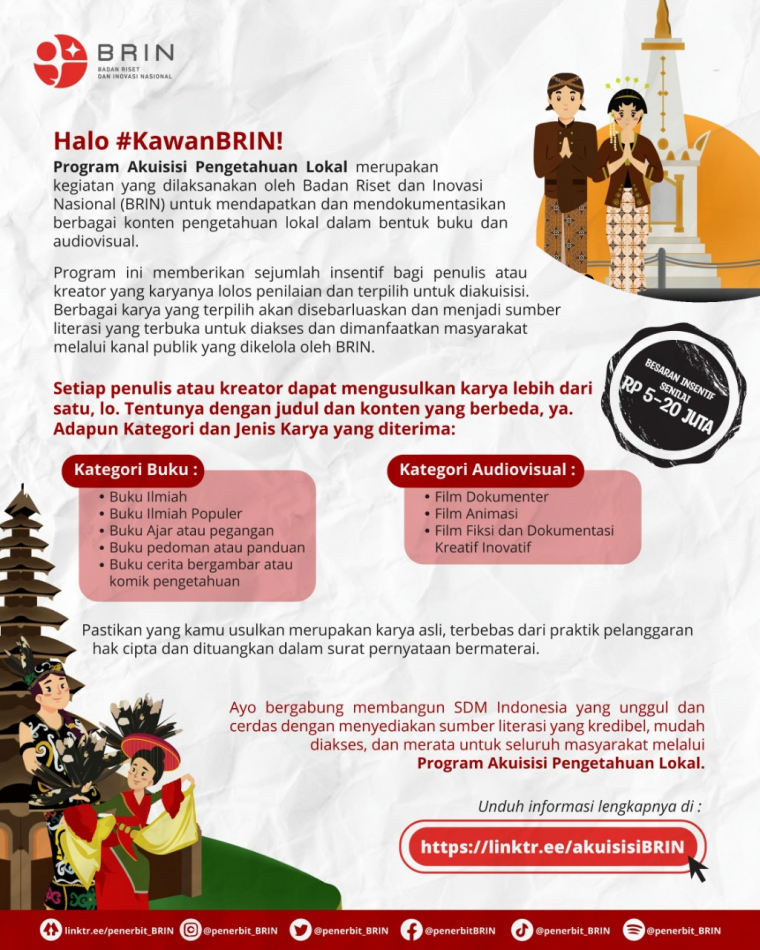









Wilayah pesisir Indonesia menghadapi tekanan serius akibat kenaikan muka laut, penurunan tanah, dan banjir rob yang semakin intensif, yang berdampak langsung pada kehidupan masyarakat pesisir serta keberlanjutan pelabuhan sebagai simpul strategis logistik nasional. Tantangan ini menuntut pendekatan adaptasi terpadu yang melindungi pesisir sekaligus memperkuat ketahanan infrastruktur pelabuhan.
Orasi ini menunjukkan bahwa integrasi teknologi hidrodinamika, data spasial presisi tinggi, kecerdasan buatan, serta solusi berbasis ekosistem memungkinkan pemetaan risiko pesisir–pelabuhan secara akurat, pemantauan real-time, dan perumusan strategi adaptasi jangka panjang berbasis bukti ilmiah. Melalui kerangka evaluasi TKT–STS–UTAUT, riset tidak berhenti pada prototipe, tetapi diterjemahkan menjadi kebijakan implementatif dan rekomendasi standar teknis, termasuk pengembangan Standar Nasional Indonesia (SNI) adaptasi pesisir dan pelabuhan berkelanjutan. Pendekatan ini memperkuat kolaborasi antara sains, pemerintah, industri, dan masyarakat dalam membangun ketahanan pesisir Indonesia di era perubahan iklim.
Alia, F., Iryani, S. Y., & Ramadhanti, N. (2021). Analisis Kapasitas Kolam Retensi Untuk Pengendalian Banjir di DAS Buah Kota Palembang. Cantilever: Jurnal Penelitian Dan Kajian Bidang Teknik Sipil, 9(2), 97–107. https://doi.org/10.35139/cantilever.v9i2.44
Andreas, H., Usriyah, Zainal Abidin, H., & Anggreni Sarsito, D. (2017). Tidal inundation (“Rob”) investigation using time series of high resolution satellite image data and from institu measurements along northern coast of Java (Pantura). IOP Conference Series: Earth and Environmental Science, 71(1). https://doi.org/10.1088/1755-1315/71/1/012005
Aprijanto;, Hakim;, B. Al, Prijambodo;, T., Prasetyo;, R. B., Sutopo;, J., & Syahrudin, I. (2017). Prototipe Aplikasi Safety Beach Monitoring System (SBMS) untuk Mendukung Zerro Accident Wisata Bahari. June, 1–14.
Aprijanto;, & Sutopo, J. (2017). PANDUAN KESELAMATAN PANTAI (1st ed.).
Aprijanto, & Aris, C. (2012). “Videography Technology Utilization For Rip Current , Sandbar And Shoreline Position Identification To Safety Management Of Coastal Tourism.” 2012.
Aprijanto, Prijambodo, T., Wibawa, B., Fithor, A., Santoso, M. A., Irfani, M., Cholishoh, E., Murtiaji, C., Ariyanto, D., & Sukmana, C. I. (2025). Innovative strategies for tidal flood protection: a systematic literature review on spatial management in coastal city (case study: Semarang City, Central Java, Indonesia). Marine Systems and Ocean Technology, 20(1). https://doi.org/10.1007/s40868-024-00158-5
Azarkamand, S., Balbaa, A., Wooldridge, C., & Darbra, R. M. (2020). Climate change-Challenges and response options for the port sector. Sustainability (Switzerland), 12(17), 1–14. https://doi.org/10.3390/SU12176941
BAPPENAS. (2014). Republic of Indonesia National Action Plan for Climate Change Adaptation (RAN-API) Ministry of National Development Planning/ National Development Planning Agency (BAPPENAS) 2014.
Bertule, M. (2017). Climate Change Adaptation Technologies for Water. UN Environment-DHI Centre on Water and Environment. http://onlinelibrary.wiley.com/doi/10.1029/2007WR006200/full
BNPB. (2024). Indeks Risiko Bencana Indonesia Tahun 2024. In Ridwan Yunus (Ed.), Badan Nasional Penanggulangan Bencana (Vol. 03). https://www.bnpb.go.id/storage/app/media/Buku BNPB/BUKU IRBI 2024_BNPB_lowres.pdf
Cahyani, K. D. (2025). Adaptasi Perubahan Iklim dan Kesiapsiagaan Bencana di Masyarakat Menggunakan Artificial Intelligence. Jurnal Penelitian Kesehatan Suara Forikes, 16, 571–576.
Deltares-Worldwateratlas. (2024). Project: One Resilient Semarang. https://www.worldwateratlas.org/narratives/water-as-leverage/wal-in-semarang-team-one-resilient-semarang/#water-neutral
Dewangi, C. L., Sugianto, D. N., Rifai, A., & Yuningsih, A. (2017). KAJIAN POTENSI ENERGI ARUS LAUT DI SELAT TOYAPAKEH , NUSA PENIDA , BALI Program Studi Oseanografi , Fakultas Perikanan dan Ilmu Kelautan , Universitas Diponegoro , Pusat Unggulan Iptek ( PUI ) Pusa. Jurnal Oseanografi, 6(1), 22–29.
Djalante, R. (2016). Research Trends on Natural Hazards, Disasters, Risk Reduction and Climate Change in Indonesia: A Systematic Literature Review. Natural Hazards and Earth System Sciences Discussions, May, 1–39. http://www.nat-hazards-earth-syst-sci-discuss.net/nhess-2016-342/
Egaputra, A. A., Ismunarti, D. H., & Pranowo, W. S. (2022). Inventarisasi Kejadian Banjir Rob Kota Semarang Periode 2012 - 2020. Indonesian Journal of Oceanography, 4(2), 29–40. https://doi.org/10.14710/ijoce.v4i2.13240
Engels, A. (2016). The Science-Policy Interface. January 2005.
Fatma, F., Ayyub, F. R., & Daimatunna’ma, Q. (2024). Studi Perubahan Luas Pantai di Wilayah Pesisir Centre Point of Indonesia, Kota Makassar. Jurnal Sains Dan Teknologi Perikanan, 4(2), 112–121. https://doi.org/10.55678/jikan.v4i2.1454
Findayani, A., Hayati, R., Amrullah, M. F., & Rahman, A.-U. (2024). Towards a Resilient City: Analyzing Semarang Preparedness in Facing Disaster Related to Climate Change, Indonesia. Jambura Geo Education Journal, 5(1), 54–66. https://doi.org/10.37905/jgej.v5i1.24470
Gerona-Daga, M. E. B., & Salmo, S. G. (2022). A systematic review of mangrove restoration studies in Southeast Asia: Challenges and opportunities for the United Nation’s Decade on Ecosystem Restoration. Frontiers in Marine Science, 9(September), 1–23. https://doi.org/10.3389/fmars.2022.987737
Giriantari, I. A. D. (2024). Pemetaan potensi untuk Nusa Penida 100% energi terbarukan. Institute for Essential Services Reform (IESR). https://iesr.or.id/pustaka/peta-jalan-nusa-penida-100-energi-terbarukan/
Hanson, S., Nicholls, R., Ranger, N., Hallegatte, S., Corfee-Morlot, J., Herweijer, C., & Chateau, J. (2011). A global ranking of port cities with high exposure to climate extremes. Climatic Change, 104(1), 89–111. https://doi.org/10.1007/s10584-010-9977-4
Husrin, S., & Solihuddin, T. (2020). Penerapan Dan Tantangan Dalam Penggunaan Struktur Hybridengineering Untuk Mengatasi Abrasi Dan Perbaikan Kawasan Pantura Jawa. April, 1–26. https://www.researchgate.net/publication/345136894_Penerapan_Dan_Tantangan_Dalam_Penggunaan_Struktur_Hybridengineering_Untuk_Mengatasi_Abrasi_Dan_Perbaikan_Kawasan_Pantura_Jawa/link/5f9eb4a2458515b7cfaf0edc/download?_tp=eyJjb250ZXh0Ijp7ImZpcnN0UGFnZSI6InB
Ilyas, A., Setianto, W., & Binabar, S. W. (2019). SISTEM INFORMASI GEOGRAFIS DAERAH ROB TERDAMPAK ROB ( Studi Kasus Di Kecamatan Pekalongan Utara Pekalongan). XIV(2), 44–49. https://ejournal.iwima.ac.id/index.php/ictech/article/view/69/57
IPCC. (2021). Climate Change 2021: The Physical Science Basis. IPCC. https://www.ipcc.ch/
IRENA. (2020). Innovation outlook: Ocean energy technologies (Issue October). www.irena.org/Publications
Irfani, M., Aprijanto, M., Rachman, R. A., & Nasython, K. (2012). Bukit Terbuka Hijau (Green Open Hills) as Green Solution of Urban Spatial Engineering in Tsunami-Prone Coastal City (Case Study: Cilacap Selatan District). Researchgate.Net, December 2021. https://www.researchgate.net/profile/Muhammad-Irfani/publication/357280053_Bukit_Terbuka_Hijau_Green_Open_Hills_as_Green_Solution_of_Urban_Spatial_Engineering_in_Tsunami-Prone_Coastal_City_Case_Study_Cilacap_Selatan_District/links/61c48a85c99c4b37eb1a2466
Iskandar, S. A., Helmi, M., Muslim, M., Widada, S., & Rochaddi, B. (2020). Analisis Geospasial Area Genangan Banjir Rob dan Dampaknya pada Penggunaan Lahan Tahun 2020 - 2025 di Kota Pekalongan Provinsi Jawa Tengah. Indonesian Journal of Oceanography, 2(3), 271–282. https://doi.org/10.14710/ijoce.v2i3.8668
Japan International Cooperation Agency. (2010). The preparatory study on disaster management program for Indonesia. March.
JICA. (2024). Project for Coastal Disaster Risk Reduction Plan Study on the North Coast of Java Island in the Republic of Indonesia. file:///D:/Aprijanto-BRIN/referensi materi Orasi Profesor riset/pustaka orasi/12386348_01.pdf
Kartika, F. D. S., Helmi, M., & Amirudin. (2019). Meta-analysis of community’s adaptation pattern with tidal flood in Pekalongan City, Central Java, Indonesia. E3S Web of Conferences, 125(201 9), 1–4. https://doi.org/10.1051/e3sconf/201912509001
Kawata, Y. (2022). Green Infrastructures in Megacity Jakarta: Current Status and Possibilities of Mangroves for Flood Damage Mitigation. 335–351. https://doi.org/10.1007/978-981-16-6791-6_21
Lochinvar, M., Abundo, S., Catanyag, M. E., Ann, M., Franco, Q., Travis, L. E., Familara, A. D. F., Hutchison, I., Papasin, M., Catanyag, C. J., Hellstern, E., Manrique, J. S., Tecson, C. M., Escoto, B., Steley, C., David, L., Capongcol, M. C., Ulgado, A. F., Malabanan, W. S., … Rivera, B. (2023). Marine Renewable Energy in the Philippines: Sustainable Energy from Ocean Spaces and Resources (Issue February).
Mankins, J. C. (2009). Technology readiness assessments: A retrospective. Acta Astronautica, 65(9–10), 1216–1223. https://doi.org/10.1016/j.actaastro.2009.03.058
Marfai, M. A., & King, L. (2008). Tidal inundation mapping under enhanced land subsidence in Semarang, Central Java Indonesia. Natural Hazards, 44(1), 93–109. https://doi.org/10.1007/s11069-007-9144-z
Marta, A. S. D., Deendarlianto, Kongko, W., Aprijanto, Rohman, A. T., Wibowo, A., & Ikhsanudin, I. Y. (2024). The Influence of Wave Characteristics, Tides, and Installation Conditions of L-Shaped OWC Wave Energy Converter on Energy Absorption Capability. Evergreen, 11(3), 2607–2617. https://doi.org/10.5109/7236900
Momani, A. M. (2020). The Unified Theory of Acceptance and Use of Technology. International Journal of Sociotechnology and Knowledge Development, 12(3), 79–98. https://doi.org/10.4018/ijskd.2020070105
Murtiaji, C., Irfani, M., Fauzi, I., Marta, A. S. D., Sukmana, C. I., & Wulandari, D. A. (2023). Methods for addressing tidal floods in coastal cities: An overview. IOP Conference Series: Earth and Environmental Science, 1224(1). https://doi.org/10.1088/1755-1315/1224/1/012019
Nashrullah, S., Aprijanto, Pasaribu, J. M., Hazarika, M. K., & Samarakoon, L. (2013). Study of flood inundation in pekalongan, central java. 34th Asian Conference on Remote Sensing 2013, ACRS 2013, 4(2), 3471–3477. https://doi.org/10.30536/j.ijreses.2013.v10.a1845
National University of Singapore (NUS). (2022). Integrated Coastal-Inland Flood Model for Climate Change. 2022.
NCICD. (2015). NCICD Executive Summary. National Capital Integrated Coastal Development, finalized 2011, 1–10.
News, M. T. (2025). Japan’s First Megawatt-Scale Tidal Energy Turbine Hits Water.pdf. Marine Technology News. https://www.marinetechnologynews.com/news/japan-first-megawatt-scale-645360
Noble, D. R., Grattan, K., & Jeffrey, H. (2025). Future Economic Potential of Tidal Stream & Wave Energy in Scotland Policy and Innovation Group. https://www.scottish-enterprise.com/
Nugroho, H., Kurniani, D., Asiska, M., & Nuraini, N. (2016). Kajian Kinerja Sistem Polder sebagai Model Pengembangan Drainase Kota Semarang Bagian Bawah dengan Balanced Scorecard. Media Komunikasi Teknik Sipil, 22(1), 43. https://doi.org/10.14710/mkts.v22i1.12508
Oukes, C., Leendertse, W., & Arts, J. (2022). Enhancing the Use of Flood Resilient Spatial Planning in Dutch Water Management. A Study of Barriers and Opportunities in Practice. Planning Theory and Practice, 23(2), 212–232. https://doi.org/10.1080/14649357.2022.2034921
Prabawardani, D. R., Aprijanto, Prijambodo, T., Fauzi, I., Airawati, M. N., Hakim, B. Al, Ariyanto, D., Santosa, M. A., Irfani, M., Prasetyo, R. B., Yulianto, F., Putri, N. C., Sukmana, C. I., Cholishoh, E., Aji, C. M., Kustiyanto, E., Wibawa, B., Rahili, N., & Sutopo, J. (2024). Port and Coastal Management Against Climate Change: a Case Study of Tanjung Emas Port Semarang, Central Java, Indonesia. Journal of Integrated Coastal Zone Management, 24(1), 55–71. https://doi.org/10.5894/rgci-n590
Rahili, N., Hakim, B. Al, Ariyanto, D., Cholishoh, E., Aprijanto, Prabawardani, D. R., Prijambodo, T., & Gumbira, G. (2023). Tidal Characteristics for Disaster Preparedness in the Port Area (Case Study: Port of Semarang, Central Java). Ilmu Kelautan: Indonesian Journal of Marine Sciences, 28(2), 181–188. https://doi.org/10.14710/ik.ijms.28.2.181-188
Rasgianti, Adiputra, R., Nugraha, A. D., Sitanggang, R. B., Pandoe, W. W., Aprijanto, Yasunaga, T., & Santosa, M. A. (2024). System Parameters Sensitivity Analysis of Ocean Thermal Energy Conversion. Emerging Science Journal, 8(2), 428–448. https://doi.org/10.28991/ESJ-2024-08-02-04
Rijke, J., van Herk, S., Zevenbergen, C., & Ashley, R. (2012). Room for the river: Delivering integrated river basin management in the netherlands. International Journal of River Basin Management, 10(4), 369–382. https://doi.org/10.1080/15715124.2012.739173
Ruckelshaus, M., Klinger, T., Knowlton, N., & DeMaster, D. P. (2008). Marine ecosystem-based management in practice: Scientific and governance challenges. BioScience, 58(1), 53–63. https://doi.org/10.1641/B580110
Safitri, R. K., & Sihombing, R. S. M. (2024). Studi Evaluasi Kinerja Program “ Normalisasi & Gotong Royong Sungai Deli ” Di Kota Medan. INNOVATIVE: Journal Of Social Science Research, 4, 494–506.
Santoso, M. A., Aprijanto, Pijambodo, T., & Shadikin, A. (2021). Konsep Safety Beach Management System Rip Current Dengan Teknologi Video Image Processing. Seminar Nasional Riset Dan Inovasi Teknologi (SEMNAS RISTEK), 865–869. http://proceeding.unindra.ac.id/index.php/semnasristek/article/view/5088
Santoso, M. A., Wijayanti, Y., Prasetyo, R. B., Setyandito, O., Nizam, Aprijanto, Subandriya, A., Kurniawan, A. T., Sudaryanto, A., & Sutejo, B. (2023). A Mini Review: Wave Energy Converters Technology, Potential Applications and Current Research in Indonesia. Evergreen, 10(3), 1642–1650. https://doi.org/10.5109/7151712
Saputri, M., & Adawiyah, P. R. (2024). Peran badan perencanaan dan pembangunan daerah dalam kebijakan rencana tata ruang wilayah dalam perspektif pembangunan berkelanjutan (studi pada. Triwikrama: Jurnal Ilmu Sosial, 4(7). http://ejournal.warunayama.org/index.php/triwikrama/article/view/4929%0Ahttp://ejournal.warunayama.org/index.php/triwikrama/article/download/4929/4569
Sidiq, T. P., Gumilar, I., Meilano, I., Abidin, H. Z., Andreas, H., & Permana, A. (2021). Land Subsidence of Java North Coast Observed by SAR Interferometry. IOP Conference Series: Earth and Environmental Science, 873(1). https://doi.org/10.1088/1755-1315/873/1/012078
Sun, J., Yuan, G., Song, L., & Zhang, H. (2024). Unmanned Aerial Vehicles (UAVs) in Landslide Investigation and Monitoring: A Review. Drones, 8(1). https://doi.org/10.3390/drones8010030
Suryani, R., Mutia, E., Ellida, D., & Lydia, N. (2020). Evaluasi Rute Evakuasi Tsunami Kecamatan Padang Barat Kota Padang Menggunakan QGIS. Jurnal Media Teknik Sipil Samudra, 1(1), 26–31. https://ejurnalunsam.id/index.php/jmtss/article/view/2863
Sutopo, J., Ainur, F., Khanapi, M., Ghani, A., & Pabbajah, M. (2025). Machine Learning Method with Random Forest Model for Flood Hydrometeorological Disaster Mitigation in Demak. 15(5), 1475–1484.
Sutopo, J., & Aprijanto. (2024). “Mitigasi Bencana Hidrometeorologi dengan Teknologi Internet of Things (Issue Maret). Penerbit K-Media.
Sutopo Joko, & Aprijanto. (2025). Manajemen Keselamatan Pantai Berbasis Teknologi Smart Beach Safety. In Pendidikan (Education) (Vol. 1, Issue 1). PT Mafy Media Literasi Indonesia. https://penerbitmafy.com/produk/manajemen-keselamatan-pantai-berbasis-teknologi-smart-beach-safety/
Tarore, B. W., Dundu, A. K. ., & Jasin, M. I. (2024). Evaluasi Kinerja Bangunan Pengaman Pantai Di Kawasan Bahu Mall Kota Manado. Jurnal Tekno, 22(87), 567–578. https://ejournal.unsrat.ac.id/v3/index.php/tekno/article/view/54755/45936
Tavana, A., Leelaprachakul, T., Kim, S. Bin, & Tokuda, D. (2025). Transition to a 100% renewable grid for a remote island: A case study of Tsushima Island, Japan. Renewable Energy Focus, 52(November 2024). https://doi.org/10.1016/j.ref.2024.100657
Temmerman, S. et. a. (2013). Ecosystem-based coastal defence in the face of global change. Nature, 504, 79–83.
Temmerman, S., Meire, P., Bouma, T. J., Herman, P. M. J., Ysebaert, T., & De Vriend, H. J. (2013). Ecosystem-based coastal defence in the face of global change. Nature, 504(7478), 79–83. https://doi.org/10.1038/nature12859
Ujianti, R. M. D., Novita, M., & Muflihati, I. (2023). Mitigation Strategy of Disaster Based on Information Technology in Semarang City. Indonesian Journal on Geoscience, 10(2), 201–214. https://doi.org/10.17014/ijog.10.2.201-214
UNDP. (2018). Five approaches to build functional early warning systems. United Nations Development Programme (UNDP), 66.
van Slobbe, E., de Vriend, H. J., Aarninkhof, S., Lulofs, K., de Vries, M., & Dircke, P. (2013). Building with Nature: In search of resilient storm surge protection strategies. Natural Hazards, 66(3), 1461–1480. https://doi.org/10.1007/s11069-013-0612-3
Whitworth, B. (2011). The Social Requirements of Technical Systems. Handbook of Research on Socio-Technical Design and Social Networking Systems, January 2009. https://doi.org/10.4018/9781605662640.ch001
Wibowo;, M., Hendriyono;, W., Suryaman;, D., Chaeroni;, Aprijanto;, Tjahjono, P., Sapto, N., Widjo, K., & Wibawa, B. (2019). Bungai Rampai Pemodelan Komputasi Untuk Mitigasi Bencana Pantai. BPPT PRESS – Jakarta, Indonesia.
Yurista, P. A., & Agung Wicaksono, D. (2017). Kompatibilitas Rencana Zonasi Wilayah Pesisir dan Pulau-Pulau Kecil (RZWP3K) sebagai Rencanan Tata Ruang yang Integratif (Compatibility of Zoning Plan for Coastal Areas and Small Islands as Integrated Spatial Planning). Rechts Vinding, 6(2), 1991–205. http://rechtsvinding.bphn.go.id/view/view_online.php?id=233

This work is licensed under a Creative Commons Attribution-ShareAlike 4.0 International License.