












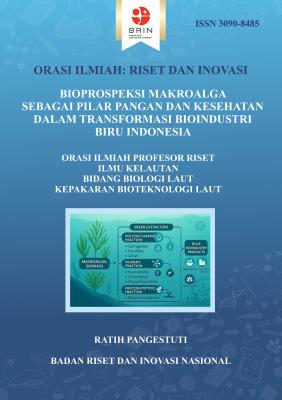
Indonesia dianugerahi kekayaan laut yang luar biasa, namun hingga kini belum sepenuhnya dimanfaatkan secara optimal sebagai fondasi pembangunan pangan dan kesehatan. Salah satu sumber daya hayati laut yang memiliki potensi strategis adalah makroalga atau rumput laut, organisme terbarukan yang melimpah dan menyimpan keragaman biomolekul bernilai tinggi. Selama ini, makroalga masih dipersepsikan terutama sebagai komoditas primer, padahal berbagai kajian ilmiah menunjukkan bahwa di dalamnya terkandung senyawa bioaktif yang berpotensi besar untuk meningkatkan kualitas kesehatan manusia dan mendukung sistem pangan berkelanjutan.
Orasi ilmiah ini merangkum pemikiran dan temuan riset mengenai bioprospeksi makroalga tropis Indonesia, mulai dari kekayaan biodiversitasnya, karakteristik metabolit primer dan sekunder, hingga aktivitas biologisnya yang relevan bagi kesehatan. Polisakarida sulfat, protein dan peptida bioaktif, asam lemak esensial, pigmen fotosintetik, serta senyawa fenolik dipaparkan sebagai dasar ilmiah pengembangan pangan fungsional, nutraseutikal, dan aplikasi bioteknologi kelautan. Orasi ini juga menyoroti kemajuan teknologi ekstraksi hijau non-konvensional sebagai kunci transisi dari eksploitasi sumber daya menuju pemanfaatan berkelanjutan yang sejalan dengan prinsip green chemistry dan ekonomi sirkular. Dengan mengintegrasikan perspektif biodiversitas, ilmu kelautan, bioteknologi, pangan, dan kesehatan, naskah ini menawarkan kerangka konseptual strategis bagi penguatan sistem pangan dan kesehatan berbasis makroalga.
Secara keseluruhan, orasi ilmiah ini menegaskan bahwa bioprospeksi makroalga merupakan pilar penting dalam pembangunan bioindustri biru Indonesia yang berdaulat, berdaya saing global, dan berkelanjutan, sekaligus berkontribusi pada ketahanan pangan, kesehatan masyarakat, dan kesejahteraan masyarakat pesisir.
Anggadiredja, J. A. (2009). Ethnobotany study of seaweed diversity and its utilization in Warambadi, Panguhalodo Areas of East Sumba District. Jurnal Teknik Lingkungan, 10(3), 297–310.
Ardiansyah, A., Rasyid, A., Siahaan, E. A., Pangestuti, R., & Murniasih, T. (2020). Nutritional value and heavy metals content of sea cucumber Holothuria scabra commercially harvested in indonesia. Current Research in Nutrition and Food Science, 8(3), 765–773. https://doi.org/10.12944/CRNFSJ.8.3.09
Arsianti, A. A., Fadilah, F., Fatmawaty, Y., Wibisono, L. K., Kusmardi, S., Azizah, N. N., Putrianingsih, R., Murniasih, T., Rasyid, A., & Pangestuti, R. (2016). Phytochemical composition and anticancer activity of seaweeds Ulva lactuca and Eucheuma cottonii against breast MCF-7 and colon HCT-116 cells. Asian Journal of Pharmaceutical and Clinical Research, 9(6). https://doi.org/10.22159/ajpcr.2016.v9i6.13798
Cao, L., Lee, S. G., Lim, K. T., & Kim, H.-R. (2020). Potential Anti-Aging Substances Derived from Seaweeds. Marine Drugs, 18(11), 564. https://doi.org/10.3390/md18110564
Corrigan, S., Cottier-Cook, E. J., Lim, P.-E., & Brodie, J. (2025). The State of The World’s Seaweeds.
Diharmi, A., Fardiaz, D., & Andarwulan, N. (2019). Chemical and Minerals Composition of Dried Seaweed Eucheuma spinosum Collected from Indonesia Coastal Sea Regions . International Journal of Oceans and Oceanography , 13(1), 65–71.
Gereniu, C. R. N., Saravana, P. S., Getachew, A. T., & Chun, B.-S. (2017). Characteristics of functional materials recovered from Solomon Islands red seaweed (Kappaphycus alvarezii) using pressurized hot water extraction. Journal of Applied Phycology, 29(3), 1609–1621. https://doi.org/10.1007/s10811-017-1052-3
Harnedy, P. A., & Fitzgerald, R. J. (2013). Bioactive Proteins and Peptides from Macroalgae, Fish, Shellfish and Marine Processing Waste. In Marine Proteins and Peptides (pp. 5–39). Wiley. https://doi.org/10.1002/9781118375082.ch2
Kim, S.K., & Pangestuti, R. (2011). Potential role of marine algae on female health, beauty, and longevity. In Advances in Food and Nutrition Research (Vol. 64). https://doi.org/10.1016/B978-0-12-387669-0.00004-1
Kim, S.K., & Pangestuti, R. (2013a). Nutritional Value of Sea Lettuces. In yaswant Pathak (Ed.), Marine Nutraceuticals Prospects and Perspectives (pp. 5–15). CRC Press.
Kim, S.K., & Pangestuti, R. (2014). Composition for preventing or treating neurodegenerative disease including boactive peptide as effective component (Patent US 2014/0094414 A1).
Kim, S.K., Pangestuti, R., & Rahmadi, P. (2011). Sea lettuces. culinary uses and nutritional value. In Advances in Food and Nutrition Research (Vol. 64). https://doi.org/10.1016/B978-0-12-387669-0.00005-3
Kim, S. K., & Pangestuti, R. (2013b). Prospects and Potential Applications of Seaweeds as Neuroprotective Agents. In Y. Pathak (Ed.), Marine Nutraceuticals Prospects and Perspectives (pp. 17–32). CRC Press.
KKP. (2024). Laporan Kinerja Kementerian Kelautan dan Perikanan 2024. https://www.kkp.go.id/publikasi/akuntabilitas-kinerja/pelaporan-kinerja/detail/laporan-kinerja-final-tahun-202467dbca81410e8.html
Kusmita, L., Mutmainah, N.F.N., Sabdono, A., Trianto, A., RAdjasa, OK., & Pangestuti, R. (2021). Characteristic evaluation of various formulations of anti-aging cream from carotenoid extract of bacterial symbiont Virgibacillus salarius strain 19PPSc16. Cosmetics, 8(4).
Lideman, Laining, A., Gafur, A., Pangestuti, R., Wahyuni, D., Safri, M., Ardyansyah, S., Adriani, I., Manikharda, Kasturi, & Fadli. (2025). Metode budidaya rumput laut Ulva spp. pada wadah terkontrol (Patent P00202512687). DJKI.
Maeda, H., Hosokawa, M., Sashima, T., Funayama, K., & Miyashita, K. (2005). Fucoxanthin from edible seaweed, Undaria pinnatifida, shows antiobesity effect through UCP1 expression in white adipose tissues. Biochemical and Biophysical Research Communications, 332(2), 392–397. https://doi.org/10.1016/j.bbrc.2005.05.002
Magwaza, S., & Islam, Md. (2023). Roles of Marine Macroalgae or Seaweeds and Their Bioactive Compounds in Combating Overweight, Obesity and Diabetes: A Comprehensive Review. Marine Drugs, 21(4), 258. https://doi.org/10.3390/md21040258
Pangestuti, R. (2012). Neuroprotective Effects of Peptides Derived from Seahorse Hippocampus trimaculatus Mediated through PI3K/Akt Pathway [Thesis]. Pukyong National University.
Pangestuti, R., & Arifin, Z. (2018). Medicinal and health benefit effects of functional sea cucumbers. In Journal of Traditional and Complementary Medicine (Vol. 8, Issue 3, pp. 341–351). National Taiwan University. https://doi.org/10.1016/j.jtcme.2017.06.007
Pangestuti, R., Bak, S.-S., & Kim, S. K. (2011). Attenuation of pro-inflammatory mediators in LPS-stimulated BV2 microglia by chitooligosaccharides via the MAPK signaling pathway. International Journal of Biological Macromolecules, 49(4). https://doi.org/10.1016/j.ijbiomac.2011.06.014
Pangestuti, R., Getachew, A. T., Siahaan, E. A., & Chun, B. S. (2019). Characterization of functional materials derived from tropical red seaweed Hypnea musciformis produced by subcritical water extraction systems. Journal of Applied Phycology, 31(4), 2517–2528. https://doi.org/10.1007/s10811-019-1754-9
Pangestuti, R., Haq, M., Rahmadi, P., & Chun, B. S. (2021). Nutritional value and biofunctionalities of two edible green seaweeds (Ulva lactuca and Caulerpa racemosa) from indonesia by subcritical water hydrolysis. Marine Drugs, 19(10). https://doi.org/10.3390/md19100578
Pangestuti, R., & Kim, S.K. (2013a). Marine Bioactive Peptide Sources: Critical Points and the Potential for New Therapeutics. In Marine Proteins and Peptides: Biological Activities and Applications. https://doi.org/10.1002/9781118375082.ch28
Pangestuti, R., & Kim, S.K. (2013b). Marine-derived bioactive materials for neuroprotection. Food Science and Biotechnology, 22(5). https://doi.org/10.1007/s10068-013-0200-z
Pangestuti, R., & Kim, S. K. (2010). Neuroprotective properties of chitosan and its derivatives. Marine Drugs, 8(7). https://doi.org/10.3390/md8072117
Pangestuti, R., & Kim, S. K. (2011a). Biological activities and health benefit effects of natural pigments derived from marine algae. Journal of Functional Foods, 3(4). https://doi.org/10.1016/j.jff.2011.07.001
Pangestuti, R., & Kim, S. K. (2011b). Neuroprotective effects of marine algae. Marine Drugs, 9(5). https://doi.org/10.3390/md9050803
Pangestuti, R., & Kim, S. K. (2014). Biological activities of Carrageenan. In Advances in Food and Nutrition Research (Vol. 72). https://doi.org/10.1016/B978-0-12-800269-8.00007-5
Pangestuti, R., & Kim, S. K. (2015a). An Overview of Phycocolloids: The Principal Commercial Seaweed Extracts. In Marine Algae Extracts: Processes, Products, and Applications (Vols. 1–2). https://doi.org/10.1002/9783527679577.ch19
Pangestuti, R., & Kim, S. K. (2015b). Carotenoids, bioactive metabolites derived from seaweeds. In Springer Handbook of Marine Biotechnology. https://doi.org/10.1007/978-3-642-53971-8_34
Pangestuti, R., & Kim, S. K. (2015c). Peptide-derived from Seahorse Exerts a Protective Effect against Cholinergic Neuronal Death in in vitro Model of Alzheimer’s Disease. Procedia Chemistry, 14, 343–352. https://doi.org/10.1016/j.proche.2015.03.047
Pangestuti, R., & Kim, S. K. (2015d). Seaweed proteins, peptides, and amino acids. In Seaweed Sustainability: Food and Non-Food Applications. https://doi.org/10.1016/B978-0-12-418697-2.00006-4
Pangestuti, R., & Kim, S. K. (2015e). Seaweeds-Derived Bioactive Materials for the Prevention and Treatment of Female’s Cancer. In Handbook of Anticancer Drugs from Marine Origin (pp. 165–176). Springer International Publishing. https://doi.org/10.1007/978-3-319-07145-9_8
Pangestuti, R., & Kim, S. K. (2017). Bioactive peptide of marine origin for the prevention and treatment of non-communicable diseases. Marine Drugs, 15(3). https://doi.org/10.3390/md15030067
Pangestuti, R., & Kurnianto, D. (2017). Green Seaweeds-Derived Polysaccharides Ulvan: Occurrence, Medicinal Value and Potential Applications. In Seaweed Polysaccharides (pp. 205–221). Elsevier. https://doi.org/10.1016/B978-0-12-809816-5.00011-6
Pangestuti, R., & Limantara, L. (2010). Rumput Laut, Zamrud Tak Terali dari Laut. BIOS, 2, 1–8.
Pangestuti, R., Rahmadi, P., Siahaan, E. A., Putra, Y., & Kim, S.-K. (2024). Seaweeds Polyphenolic Compounds: A Marine Potential for Human Skin Health. In Seaweeds and Seaweed-Derived Compounds (pp. 291–307). Springer International Publishing. https://doi.org/10.1007/978-3-031-65529-6_10
Pangestuti, R., Rahmadi, P., Siahaan, E., Nisa, K., Poeloengasih, C., Kurnianto, D., & Lideman. (2025). Sea grape-based traditional foods in Indonesia: a glimpse into the tropical coastal culinary heritage. Journal of Ethnic Foods, 12(20), 1. https://doi.org/10.1186/s42779-025-00281-7
Pangestuti, R., Ridwanudin, A., Putra, Y., Prathama, I., Rahmadi, P., Siahaan, E., & KIm, S. (2022). Valuable bioproducts from seaweeds obtained by green extraction technologies: Potential health benefits and applications in pharmacological industries. In V. Pandey (Ed.), Algae and Aquatic Macrophytes in Cities (pp. 315–347). Elsevier.
Pangestuti, R., Ryu, B., Himaya, S., & Kim, S.-K. (2013). Optimization of hydrolysis conditions, isolation, and identification of neuroprotective peptides derived from seahorse Hippocampus trimaculatus. Amino Acids, 45(2). https://doi.org/10.1007/s00726-013-1510-4
Pangestuti, R., Shin, K. H., & Kim, S. K. (2021). Anti-photoaging and potential skin health benefits of seaweeds. In Marine Drugs (Vol. 19, Issue 3). MDPI. https://doi.org/10.3390/MD19030172
Pangestuti, R., & Siahaan, E. A. (2018). Seaweed-derived carotenoids. In Bioactive Seaweeds for Food Applications: Natural Ingredients for Healthy Diets (pp. 95–107). Elsevier. https://doi.org/10.1016/B978-0-12-813312-5.00005-4
Pangestuti, R., Siahaan, E. A., & Kim, S. K. (2018). Photoprotective substances derived from marine algae. In Marine Drugs (Vol. 16, Issue 11). MDPI AG. https://doi.org/10.3390/md16110399
Pangestuti, R., Siahaan, E. A., Sedayu, B. B., Poelongasih, C. D., Wullandari, P., Sefrienda, A. R., & Fadhilah, N. (2024). Development of Marine Foods in Indonesia. AIP Conference Proceedings, 2957(1). https://doi.org/10.1063/5.0183932
Pangestuti, R., Siahaan, E., Putra, Y., & Rahmadi, P. (2021). Polysaccharides from Marine Microalgal Source. In SP Singh & SK Upadhyay (Eds), Bioprospecting of Microorganism-Based Industrial Molecules (pp 278-294), Hohn Wiley & Sons Ltd.
Pangestuti, R., Suryanegara, L., Rahmadi, P., & Kurnianto, D. (2024). Nutritional value of red and brown seaweeds from Indonesia. AIP Conference Proceedings, 2973(1). https://doi.org/10.1063/5.0184461
Pangestuti, R., Susanto, E., Siahaan, E. A., Munarwoh, H. S. H., Ningrum, A., & Purnamayati, L. (2024). Brown seaweed phenolics and photosynthetic pigments: Bioavailability, challenges, and potential applications in food industries. Journal of Applied Pharmaceutical Science, 14(1), 1–18. https://doi.org/10.7324/JAPS.2024.121531
Pangestuti, R., Vo, T.-S., Ngo, D.-H., & Kim, S.-K. (2013). Fucoxanthin ameliorates inflammation and oxidative reponses in microglia. Journal of Agricultural and Food Chemistry, 61(16). https://doi.org/10.1021/jf400015k
Pangestuti, R., & Wibowo, S. (2013). Prospects and health-promoting effects of brown algal-derived natural pigments. Squalene, 8(1), 37–46.
Park, N.-H., Choi, J.-S., Hwang, S.-Y., Kim, Y.-C., Hong, Y.-K., Cho, K. K., & Choi, I. S. (2013). Antimicrobial activities of stearidonic and gamma-linolenic acids from the green seaweed Enteromorpha linza against several oral pathogenic bacteria. Botanical Studies, 54(1), 39. https://doi.org/10.1186/1999-3110-54-39
Permatasari, H. K., Nurkolis, F., Hardinsyah, H., Taslim, N. A., Sabrina, N., Ibrahim, F. M., Visnu, J., Kumalawati, D. A., Febriana, S. A., Sudargo, T., Tanner, M. J., Kurniatanty, I., Yusuf, V. M., Rompies, R., Bahar, M. R., Holipah, H., & Mayulu, N. (2022). Metabolomic Assay, Computational Screening, and Pharmacological Evaluation of Caulerpa racemosa as an Anti-obesity With Anti-aging by Altering Lipid Profile and Peroxisome Proliferator-Activated Receptor Coactivator 1 Levels. Frontiers in Nutrition, 9.
Poeloengasih, C. D., Pangestuti, R., Siahaan, E. A., Putra, Y., Bardant, T. B., Prasetyo, D. J., Hernawan, Jatmiko, T. H., Suratno, Khasanah, Y., Ali, L., Christyandari, D. A., Widiastuti, W., Suryani, R., Windarsih, A., Kumayanjati, B., & Wahyudin, N. (2023). Seasonal effect on the amino acid and fatty acid profiles of Ulva spp. collected from Sepanjang Beach, Yogyakarta, Indonesia. IOP Conference Series: Earth and Environmental Science, 1289(1).
Poeloengasih, Pangestuti, R., Prasetyo, D., Hernawan, Jatmiko, T., Khasanah, Y., SIahaan, E., Putra, Y., Ali, L., Christyandari, D., Widiastuti, W., & Wahyudin, N. (2023). Nori substitusi berbahan dasar alga hijau ulva spp. dan proses pembuatannya (Patent P00202315106). DJKI.
Puspita, M., Setyawidati, N., & Pangestuti, R. (2020). Hydrocolloid Production of Indonesian Seaweeds . In Encyclopedia of Marine Biotechnology (Vol. 1, pp. 407–416).
Putra, Y., Siahaan, E., Pangestuti, R., Ali, L., & Wahab, A. (2025). Characterization of powdered S. japonica as carrier material for natural food preservatives (Patent EC002025167213). Direktur Hak Cipta dan Desain Industry.
Rahmadi, P., Pangestuti, R., & Salim, G. (2011). Potensi Rumput Laut Sebagai Bahan Dasar Kosmeseutikal. Jurnal Harpodon Borneo, 4(1), 77–88.
Rahmadi, P., Pangestuti, R., & Susanto, A. (2010). History, Nutrition, and Advantages of Seaweed for Human Body. Journal of Marine Bioscience and Biotechnology, 4(1), 15–23.
Rahmadi, P., Sjafrie, NDSM., Rizqi, MP., Triyono., Handayani, A., Kusnasi, A., Duan, D., Dirhamsyah, Hernawan, UE., & Pangestuti, R. (2025). Opportunities in Seaweed (Eucheumatoids) Cultivation in Indonesia: A Review and Strategic Recommendations. Aquaculture International, 33, 680.
Rasyid, A., Ardiansyah, A., & Pangestuti, R. (2019). Nutrient Composition of Dried Seaweed Gracilaria gracilis. Ilmu Kelautan: Indonesian Journal of Marine Sciences, 24(1), 1–6.
Rumphius, G. (1750). Herbarium amboinense plurimas conplectens arbores (6).
Saravana, P. S., Cho, Y.-J., Park, Y.-B., Woo, H.-C., & Chun, B.-S. (2016). Structural, antioxidant, and emulsifying activities of fucoidan from Saccharina japonica using pressurized liquid extraction. Carbohydrate Polymers, 153, 518–525. https://doi.org/10.1016/j.carbpol.2016.08.014
Sekretariat Kabinet RI. (2019). Peraturan Presiden Republik Indonesia Nomor 33 Tahun 2019 Tentang Peta Panduan (Road Map) Pengambengan Industri Rumput Laut Nasional Tahun 2018-2021.
Siahaan, E., Asaduzzaman, A. K. M., & Pangestuti, R. (2018). Chemical Compositions of Two Brown Seaweed Species from Karimun Jawa, Indonesia. Marine Research in Indonesia, 43(2), 71–78. https://doi.org/10.14203/mri.v43i2.480
Siahaan, E., Pangestuti, R., & Kim, S. K. (2018). Seaweeds: valuable ingredients in pharmaceutical industries. In P. H. Rampelotto & A. Trincone (Eds.), Grand Challenges in Biology and Biotechnology Grand Challenges in Marine Biotechnology (pp. 49–95). Springer. http://www.springer.com/series/13485
Siahaan, E., Putra, Y., Pangestuti, R., Poeloengasih, C., Hadi, A., & Aini, Z. (2024). Komposisi makanan ringan nori berbahan dasar rumput laut Ulva lactuca dan Eucheuma denticulatum bersalut perenyah dan proses pembuatannya (Patent P00202414771). DJKI.
Siahaan, E., & Pangestuti, R. (2017). Pangan fungsional dan nutrasetikal dari laut: Prospek dan tantangannya. Depik, 6(3), 273–281. https://doi.org/10.13170/depik.6.3.6874
Suryaningtyas, I., Je, J.-Y., & Pangestuti, R. (2023). Protein from Seaweed Aquaculture. In B. Tiwari & L. Healy (Eds.), Future Proteins Sources, Processing, Applications and the Bioeconomy (pp. 131–152). Academic Press.
Susanto, E., Fahmi, A. S., Hosokawa, M., & Miyashita, K. (2019). Variation in Lipid Components from 15 Species of Tropical and Temperate Seaweeds. Marine Drugs, 17(11), 630. https://doi.org/10.3390/md17110630
Syafitri, T., Hafiludin, H., & Chandra, A. B. (2022). Pemanfaatan Ekstrak Rumput Laut (Eucheuma cottonii) Dari Perairan Sumenep Sebagai Antioksidan. Jurnal Kelautan: Indonesian Journal of Marine Science and Technology, 15(2), 160–168. https://doi.org/10.21107/jk.v15i2.14905
United Nations DESA/Population Division. (2024). World Population Prospects. United Nations. https://desapublications.un.org/publications/world-population-prospects-2024-summary-results?_gl=1*1he9h98*_ga*MTI0MTAzNDU4My4xNzU2OTkxNzE3*_ga_TK9BQL5X7Z*czE3NjA3OTI3OTMkbzEkZzEkdDE3NjA3OTMxMDQkajYwJGwwJGgw
Widjaja, EA., Rahayuningsih, Y., Rahajoe, J.S., Ubaidillah, R., Maryanto, I., Walujo, E.B., & Semiadi, G. (2014). Keaneka ragaman hayati Indonesia. LIPI Press, 344 pp.
Wijesekara, I., Pangestuti, R., & Kim, S. K. (2011). Biological activities and potential health benefits of sulfated polysaccharides derived from marine algae. In Carbohydrate Polymers (Vol. 84, Issue 1, pp. 14–21). https://doi.org/10.1016/j.carbpol.2010.10.062
Yasuda, A., Wagatsuma, M., Murase, W., Kubota, A., Kojima, H., Ohta, T., Hamada, J., Maeda, H., & Terasaki, M. (2022). Fucoxanthinol Promotes Apoptosis in MCF-7 and MDA-MB-231 Cells by Attenuating Laminins–Integrins Axis. Onco, 2(3), 145–163. https://doi.org/10.3390/onco2030010
Zaneveld, J. S. (1959). The Utilization of Marine Algae in Tropical South and East Asia. Economic Botany, 13(2), 89–131.
Zhang, R., Ren, Y., Ren, T., Yu, Y., Li, B., & Zhou, X. (2025). Marine-Derived Antioxidants: A Comprehensive Review of Their Therapeutic Potential in Oxidative Stress-Associated Diseases. Marine Drugs, 23(6), 223. https://doi.org/10.3390/md23060223

This work is licensed under a Creative Commons Attribution-ShareAlike 4.0 International License.