



























Radiasi dan bahan nuklir kini digunakan secara luas untuk menunjang kesejahteraan manusia, mulai dari bidang medis, industri, pertanian, hingga riset, sementara bahan nuklir dimanfaatkan sebagai sumber energi listrik berskala besar. Namun di balik manfaatnya, pemanfaatan sumber radiasi dan bahan nuklir tidak lepas dari risiko kecelakaan—baik yang terjadi secara tidak sengaja akibat kelalaian saat pengangkutan atau pengoperasian instalasi, maupun yang disengaja untuk mencelakakan individu, komunitas, bahkan sebuah kota. Bersama zat kimia dan biologis, bahan radiasi dan nuklir tergolong bahan berbahaya yang berpotensi menimbulkan bencana bagi manusia, hewan, tumbuhan, dan lingkungan, serta kerap dikaitkan dengan situasi terorisme, peperangan, atau kecelakaan yang menuntut respons darurat khusus.
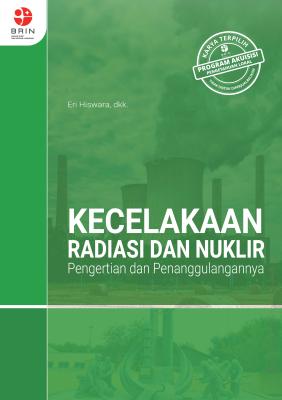
Buku Kecelakaan Radiasi dan Nuklir: Pengertian dan Penanggulangannya hadir untuk membekali pembaca dengan pemahaman komprehensif mengenai jenis-jenis radiasi, efek kesehatan dan psikososialnya, serta ragam kecelakaan radiasi dan nuklir baik yang disengaja maupun tidak. Buku ini juga membahas jenis senjata berbasis radiasi dan nuklir, langkah perlindungan diri, respons perorangan hingga institusional, penanganan medis bagi korban, pemulihan area terdampak, serta instrumen legal terkait di tingkat internasional, kawasan, dan nasional.
Akleyev, A. V., Krestinina, L. Y., Degteva, M. O., & Tolstykh, E. I. (2017). Consequences of the radiation accident at the Mayak production association in 1957 (the “Kyshtym accident”). Journal of Radiological Protection, 37, R19–R42. https://doi.org/10.1088/1361-6498/aa7f8d
American Red Cross. (t.t.-a). Coping with shelter-in-place emergencies. https://www.redcross.org/content/dam/redcross/atg/PDF_s/Preparedness___Disaster_Recovery/Disaster_Preparedness/Terrorism/Coping_with_ShelterinPlace_Emergencies.pdf
American Red Cross. (t.t.-b). Nuclear explosion and radiation emergencies. https://www.redcross.org/get-help/how-to-prepare-for-emergencies/types-of-emergencies/nuclear-explosion-radiation-emergencies.html
ANL (Argonne National Laboratory). (2005, Agustus). Radiological dispersal device (RDD) [Fact sheet]. https://iwaste.epa.gov/rpts/anl_hhfs_rdd.pdf
Ansari, A. (2010). Radiation threats and your safety: A guide to preparation and response for professionals and community. CRC Press.
Anshory, W. W. (2025). Target dekontaminasi Cs-137 di Cikande rampung paling lambat sebelum bulan Ramadhan 2026. Kompas.com. https://www.kompas.com/banten/read/2025/10/13/164500388/target-dekontaminasi-cs-137-di-cikande-rampung-paling-lambat-sebelum
Ardiansyah, H. (2025). Kasus udang Cikande dan alarm waspada paparan radiasi dari logam bekas. The Conversation. https://theconversation.com/kasus-udang-cikande-dan-alarm-waspada-paparan-radiasi-dari-logam-bekas-268304
Arms Control Association. (2024). Nuclear weapons: Who has what at a glance. https://www.armscontrol.org/factsheets/nuclear-weapons-who-has-what-glance
ASEAN (Association of South East Asian Nations). (t.t.). Treaty on the Southeast Asia Nuclear Weapon-Free Zone. https://agreement.asean.org/media/download/20131230234315.pdf
Atomic Archive. (t.t.). The energy from nuclear weapons. https://www.atomicarchive.com/science/effects/energy.html
BAPETEN (Badan Pengawas Tenaga Nuklir). (2013). Peraturan Kepala BAPETEN Nomor 4 Tahun 2013 tentang Keselamatan Radiasi dalam Pemanfaatan Tenaga Nuklir. https://jdih.bapeten.go.id/id/dokumen/peraturan/peraturan-kepala-badan-no-4-tahun-2013-tentang-keselamatan-radiasi-dalam-pemanfaatan-tenaga-nuklir
BAPETEN. (2020a). BAPETEN press release (004/PR/HM 02/BHKK/II/2020). https://www.bapeten.go.id/upload/39/3e77133f3b-press-release-bapeten-no-004-nilai-batas-dosis-berdasarkan-wbc.pdf
BAPETEN. (2020b). Pernyataan status clearance atas lahan terkontaminasi radioaktif di perumahan BATAN Indah – Tangerang Selatan. https://bapeten.go.id/upload/15/cddb7bce2f-deklarasi-cleraence-rev2.pdf
BAPETEN. (2021). Pedoman kesiapsiagaan dan penanggulangan kedaruratan nuklir nasional. [catatan: tautan resmi menyusul dari penulis]
BAPETEN. (2025a). BAPETEN lakukan verifikasi lapangan terkait temuan komoditas cengkih terkontaminasi zat radioaktif di Lampung. https://bapeten.go.id/berita/bapeten-lakukan-verifikasi-lapangan-terkait-temuan-komoditas-cengkih-terkontaminasi-zat-radioaktif-di-lampung--152417
BAPETEN. (2025b). Sosialisasi dampak radiasi ke masyarakat sekitar kawasan industri modern Cikande. https://www.bapeten.go.id/berita/sosialisasi-dampak-radiasi-ke-masyarakat-sekitar-kawasan-industri-modern-cikande-091723
Blastak, M. (2021). Abdul Qadeer Khan and his proliferation network. https://www.securityoutlines.cz/abdul-qadeer-khan-and-his-proliferation-network/
BPHN (Badan Pembinaan Hukum Nasional). (2023). Hasil penyelarasan naskah akademik rancangan undang-undang tentang ketenaganukliran. https://bphn.go.id/data/documents/hasil_penyelarasan_na_ruu_ketenaganukliran.pdf
BRIN (Badan Riset dan Inovasi Nasional). (2025). Belajar dari kasus radiasi Cikande, seberapa penting portal monitor radiasi? https://www.brin.go.id/news/125605/belajar-dari-kasus-radiasi-cikande-seberapa-penting-portal-monitor-radiasi
Caballero-Anthony, M., & Trajano, J. C. (2018). Stopping dirty bombs in Southeast Asia. East Asia Forum. https://eastasiaforum.org/2018/12/04/stopping-dirty-bombs-in-southeast-asia/
CDC (Centers for Disease Control and Prevention). (t.t.). Radiological exposure device (RED). https://www.cdc.gov/radiation-emergencies/infographic/radiological-exposure-device.html
The Chernobyl Forum. (2006). Chernobyl’s legacy: Health, environmental and socio-economic impacts, and recommendations to the governments of Belarus, the Russian Federation and Ukraine. https://www.who.int/publications/m/item/chernobyl-s-legacy-health-environmental-and-socio-economic-impacts-and-recommendations-to-thegovernments-of-belarus-the-russian-federation-and-ukraine
CNN Indonesia. (2024, Oktober 12). Kenapa senjata uranium terlarang dalam perang? CNN Indonesia. https://www.cnnindonesia.com/internasional/20241011141932-120-1154307/kenapa-senjata-uranium-terlarang-dalam-perang
CNN Indonesia. (2025, September 30). Fakta-fakta pencemaran radioaktif Cs-137 di Cikande Serang. CNN Indonesia. https://www.cnnindonesia.com/nasional/20250930120754-20-1279217/fakta-fakta-pencemaran-radioaktif-cs-137-di-cikande-serang
CTBTO (The Preparatory Commission for the Comprehensive Nuclear-Test-Ban Treaty Organization). (t.t.-a). Comprehensive Nuclear-Test-Ban Treaty (CTBT). https://www.ctbto.org/sites/default/files/2023-10/2022_treaty_booklet_E.pdf
CTBTO. (t.t.-b). Status of signature and ratification. https://www.ctbto.org/our-mission/states-signatories
Cullings, H. M., Funamoto, S., Egbert, S. D., Griffin, K. T., Paulbeck, C. J., Domal, S. J., Correa-Alfonso, C. M., Shimizu, S., Sato, T., Lee, C., Endo, A., & Bolch, W. E. (2025). History and current developments of RERF dosimetry. Carcinogenesis, 46(3), Article bgaf045. https://doi.org/10.1093/carcin/bgaf045
Engin, V. S., Tufan, F., Besisik, S. K., Engin, G., Ozturk, M., & Ersoy, S. (2015). Hematological aftermath of the radiation accident in Istanbul. International Journal of Radiation Biology, 91(9), 724–731. https://doi.org/10.3109/09553002.2015.1054527
EPA (US Environmental Protection Agency). (t.t.). Depleted uranium. https://www.epa.gov/radtown/depleted-uranium
FNCA (Forum for Nuclear Cooperation in Asia). (2003). Safe management of spent radiation sources (Activity report of SRSM Task Group). FNCA RWM-R002. https://www.fnca.mext.go.jp/english/rwm/FNCA_RWM_SRSM_Task_Report.pdf
FNSA (French Nuclear Safety Authority) (t.t.). Triage questionnaire: Guide medical response in a nuclear or radiological emergency. Diakses 10 Desember 2024 dari https://www.french-nuclear-safety.fr/content/download/199527/file/Triage%20questionnaire%20-%20Guide%20medical%20response%20in%20a%20nuclear%20or%20radiological%20emergency%20-%202023.docx
Galanda, D., Tatarova, D., Kuruc, J., Gaálová, B., & Slimáková, J. (2019). Radioactive remediation of aquatic ecosystems using microalgae. Radiat.Prot.Dosim. 186(2-3)296-300. https://doi.org/10.1093/rpd/ncz221.
González, A.J. (2022). Legal imputation of radiation harm to radiation exposure situations, dalam International Atomic Energy Agency (Ed.), Nuclear law: The global debate (141-159). Springer.
https://link.springer.com/book/10.1007/978-94-6265-495-2
Harrison, J., Fell, T., Leggett, R., Lloyd, D., Puncher, M. & Youngman, M. (2017). The polonium-210 poisoning of Mr. Alexander Litvinenko. J.Radiol.Prot. 37, 266-278.
https://doi.org/10.1088/1361-6498/aa58a7Hiswara, E. (2023). Pedoman kesiapsiagaan dan tanggap darurat medis: Studi kasus kecelakaan radiasi. Pustaka Panasea.
Hudzietzová, J., Sabol, J., & Šesták, B. (2016). Radiation protection aspects relevant to radiological terrorism. International Journal of Radiation and Nuclear Science, Medicine, Engineering, Technology and Ecology (RAD Journal), 1(1), 69–75. https://doi.org/10.21175/RadJ.2016.01.13
IAEA (International Atomic Energy Agency). (t.t.-a). Depleted uranium. https://www.iaea.org/topics/spent-fuel-management/depleted-uranium
IAEA. (t.t.-b). Frequently asked Chernobyl questions. https://www.iaea.org/newscenter/focus/chernobyl/faqs
IAEA. (t.t.-c). Fukushima Daiichi ALPS treated water discharge. https://www.iaea.org/topics/response/fukushima-daiichi-nuclear-accident/fukushima-daiichi-alps-treated-water-discharge
IAEA. (t.t.-d). Missing dangerous source during transport has been found. https://www-news.iaea.org/ErfView.aspx?mId=fd650b1f-e5df-4c29-8674-64f16b1d610c
IAEA. (t.t.-e). Radiation monitoring and decontamination of the working area. https://humanhealth.iaea.org/hhw/radiopharmacy/virrad/radiation_monitoring/index.html
IAEA. (1988a). Radiation sources: Lessons from Goiânia. IAEA Bulletin, 30(4), 10–17. https://www.iaea.org/sites/default/files/publications/magazines/bulletin/bull30-4/30402781017.pdf
IAEA. (1988b). The radiological accident in Goiânia. https://www.iaea.org/publications/3684/the-radiological-accident-in-goiania
IAEA. (1989). Cleanup of large areas contaminated as a result of a nuclear accident (IAEA Technical Report Series No. 300). https://www.iaea.org/publications/1403/cleanup-of-large-areas-contaminated-as-a-result-of-a-nuclear-accident

This work is licensed under a Creative Commons Attribution-NonCommercial-ShareAlike 4.0 International License.
This book that publish in BRIN Publishing is licensed under a Creative Commons Attribution Non-commercial Share Alike 4.0 International license (CC BY-NC-SA 4.0). This license permits you to share, copy, distribute and transmit the work for your personal use and non-commercial purposes, provided you provide appropriate attribution. Derivative works and modifications must use the same license. Detailed information regarding the CC-BY-NC-SA 4.0 license is available via the link: https://creativecommons.org/licenses/by-nc-sa/4.0/
BRIN Publishing has a program named Akuisisi Pengetahuan Lokal that acquisition any of books or audiovisual content that meet our standard publication. The rights of BRIN Publishing is to disseminate and distribute all the content acquisitions for the public.
As an author you (or your employer or institution) may do the following:
All copies, print or electronic, or other use of the paper or article must include the appropriate bibliographic citation for the books


