

























Gamelan bukan hanya sekadar kumpulan alat musik tradisional yang dimainkan secara bersama-sama hingga menghasilkan suara yang indah, namun juga memiliki makna filosofis yang mendalam. Masing-masing alat musik gamelan mempunyai peran dan makna tersendiri sehingga tercipta keselarasan dan kerja sama yang baik antarpemain. Hal ini mencerminkan nilai-nilai persatuan yang mendalam dari kohesi masyarakat Indonesia, khususnya di Pulau Jawa.
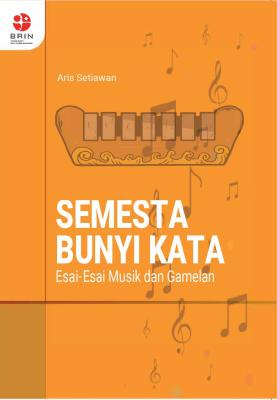
Buku Semesta Bunyi Kata: Esai-Esai Musik dan Gamelan hadir untuk hadir untuk membuka, menginformasikan, dan memberikan wawasan masyarakat mengenai musik dan khususnya gamelan. Buku ini berisi esai-esai yang mengeksplorasi isu-isu mutakhir terkait gamelan, seperti ulasan pertunjukan gamelan (termasuk di dalamnya dibahas mengenai senimannya serta polemik-polemik yang dihadapi), interrelasi antara musik dan industri, politik, sosial, budaya, serta hukum. Buku ini dapat dimanfaatkan sebagai sumber referensi bagi peneliti atau akademisi serta masyarakat luas untuk pembelajaran terkait gamelan.
Adriaan, J. T. (2007). Penggabungan idiom-idiom gamelan ke dalam musik jazz. Universitas Gadjah Mada.
Armstrong, K. (2014). Sejarah Tuhan: Kisah 4.000 tahun pencarian tuhan dalam agama-agama manusia. Mizan Pustaka.
Arps, B. (2009). Osing kids and the banners of Blambangan Ethnolinguistic identity and the regional past as ambient themes in an East Javanese town. Wacana, Journal of the Humanities of Indonesia, 11(1), 1–38.
Becker, J., Kunst, J., & Heins, E. L. (2006). Music in Java; Its History, Its Theory and Its Technique. Ethnomusicology, 19(2), 310. https://doi.org/10.2307/850365
Djajadiningrat, M., & Brinkgreve, C. (2016). Persahabatan musik: Surat menyurat Mangkunegoro VII dengan Etnomusikologi Jaap Kunts, 1919 Sampai 1940. In B. Barendregt & E. Bogaerts (Eds.), Merenungkan Gema: Perjumpaan Musikal Indonesia-Belanda (pp. 201–226). Indonesia, KITLV-Jakarta bekerja sama dengan Yayasan Pustaka Obor.
Hardjana, S. (2004a). Esai dan kritik musik. Galang Press.
Hardjana, S. (2004b). Musik antara kritik dan apresiasi. Penerbit Buku Kompas.
Henley, J. (2012). Good vibrations: Music and social education for young offenders.
Hood, M. (1954). The nuclear theme as a determinant of patet in Javanese music. Da Capo Press.
Ibrahim, R. (2015). (Ken)apa Pop Indonesia Dianggap Murahan. Disorder Zine.
Ikhwan, N. (2003). Proses Magis Sirompak: Unsur-Unsur yang membangunnya. Keteg: Jurnal Pengetahuan, Pemikiran dan Kajian Tentang Bunyi, 3(1).
Kunst, J. (1934). De toonkunst van Java (Issue v. 2). M. Nijhoff.
Kurniawan, Z. (2013). Peran Sapto Raharjo dalam mempopulerkan gamelan. Pascasarjana Institut Seni Indonesia Surakarta.
Marching, S. T. (2010, January 29). Kebisuan perempuan komponis. Koran Kompas.
Merriam, A. P. (1964). The anthropology of music. Northwestern University Press.
Miksic, J. N. (1997). Music of Indonesia. Edited by Philip Yampolsky. Volume 1: “Songs Before Dawn: Gandrung Banyuwangi”, Volume 2: “Indonesian Popular Music: Kroncong, dangdut, & Langgam Jawa”, Volume 3: “Music from the Outskirts of Jakarta: Gambang Kromong”, Volume 4: “M. Journal of Southeast Asian Studies, 28(1), 209–210. https://doi.org/10.1017/S0022463400015435
Moernantyo, D. (2015). Marjinalisasi perempuan dalam musik: Dosa laki-laki atau industrinya? Diakses pada 1 Maret, 2020,, dari https://lakilakibaru.or.id/
Pranoto, D. (2015). Identitas etno kultural dalam Sastra Using: Pembacaan syair lagu-lagu Banyuwangi sebelum dan sesudah 65. Dalam A. RM (Ed.), Jagad Osing: Seni, Tradisi, dan Kearifan Lokal Osing. Rumah Budaya Osing dan Lembaga Adat Osing.
Pratama, A. S. G. (2014). Fungsi lagu dalam kegiatan pembinaan fisik siang siswa Skadik 405 Pangkalan TNI AU Adi Soemarmo Solo. Institut Seni Indonesia Surakarta.
Priherdityo, E. (2015, 9 Maret). Java Jazz Festival: Jazz yang pop atau pop yang jazz?. CNN. https://www.cnnindonesia.com/hiburan/20150309053001-227-37685/java-jazz-festival-jazz-yang-pop-atau-pop-yang-jazz
Riberu, J. (1983). Tonggak sejarah pedoman arah. Dokumen Konsili Vatikan II. Dokpen Mawi.
Ricklefs, M. C. (2013). Mengislamkan Jawa. PT Serambi Ilmu Semesta.
Sagan, C., Drake, F. D., & Lomberg, J. (1978). Murmurs of Earth: The Voyager Interstellar Record. Random House.
Santosa, I. (2011). Legiun Mangkunegaran, 1808-1942: Tentara Jawa-Perancis warisan Napoleon Bonaparte. Penerbit Buku Kompas.
Sumarsam. (2003). Gamelan: Interaksi budaya dan perkembangan musikal di Jawa. Pustaka Pelajar.
Susanti, D. P. (2013). Akulturasi Kristen dan Jawa dalam tata ibadah gereja injili di Tanah Jawa (Gitj) Genengmulyo Kecamatan Juwana Kabupaten Pati. Universitas Negeri Semarang.
Udayana, A. E. (1995). Bentuk dan fungsi karawitan Jawa dalam Liturgi Gereja Katolik di Yogyakarta dan Surakarta: Suatu tinjauan agama dan seni. Sekolah Tinggi Seni Indonesia (STSI) Surakarta.
Wibisono, J. (2012). Saling silang Indonesia-Eropa: Dari diktator, musik, hingga bahasa. Marjin Kiri.

This work is licensed under a Creative Commons Attribution-NonCommercial-ShareAlike 4.0 International License.
This book that publish in BRIN Publishing is licensed under a Creative Commons Attribution Non-commercial Share Alike 4.0 International license (CC BY-NC-SA 4.0). This license permits you to share, copy, distribute and transmit the work for your personal use and non-commercial purposes, provided you provide appropriate attribution. Derivative works and modifications must use the same license. Detailed information regarding the CC-BY-NC-SA 4.0 license is available via the link: https://creativecommons.org/licenses/by-nc-sa/4.0/
BRIN Publishing has a program named Akuisisi Pengetahuan Lokal that acquisition any of books or audiovisual content that meet our standard publication. The rights of BRIN Publishing is to disseminate and distribute all the content acquisitions for the public.
As an author you (or your employer or institution) may do the following:
All copies, print or electronic, or other use of the paper or article must include the appropriate bibliographic citation for the books