
















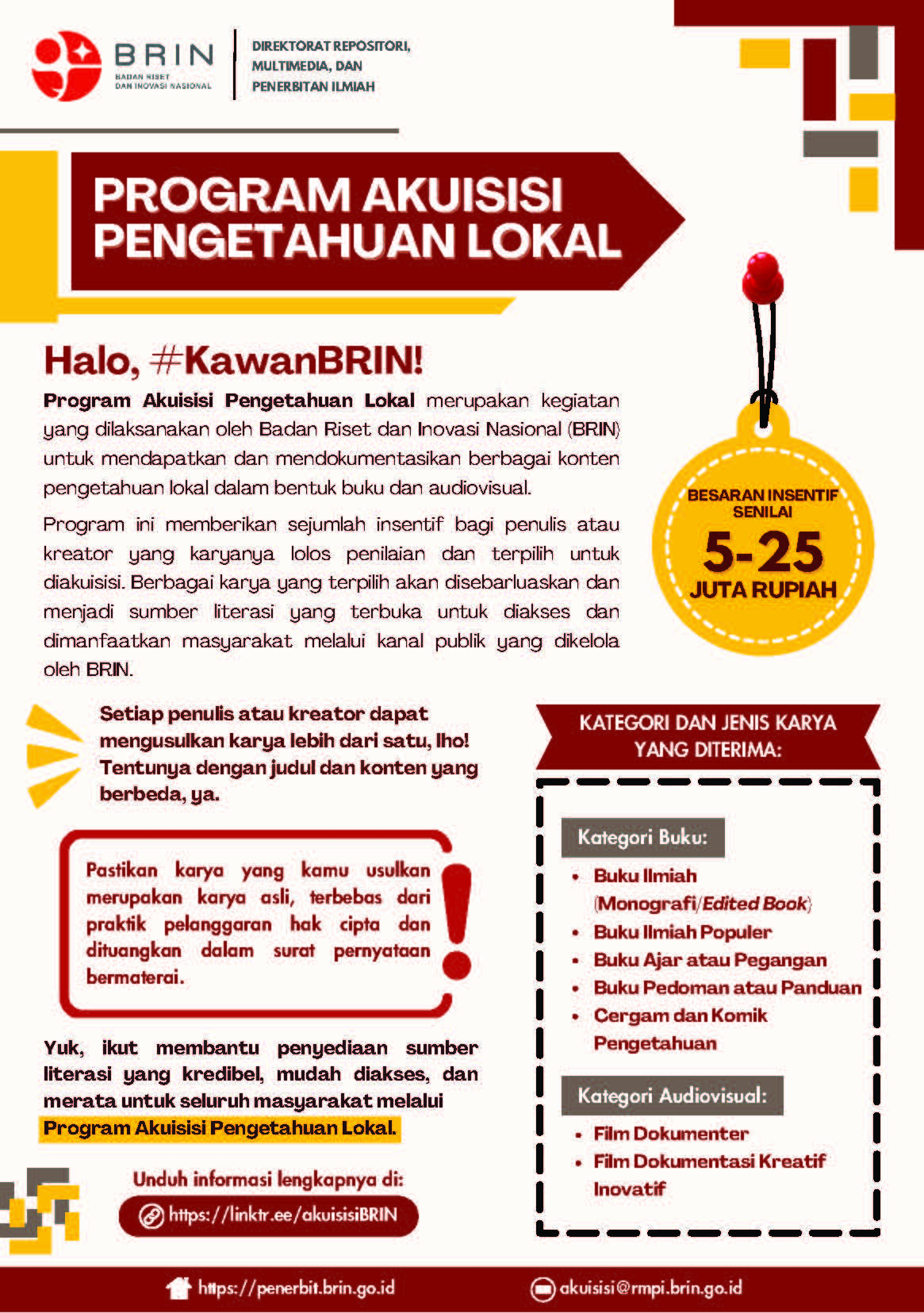










Air sebagai sumber kehidupan manusia,hewan,tumbuhan dan semua makhluk ciptaan Tuhan,adalah satu keniscayaan.Oleh karena itulah sebelum ada kehidupan terlebih dahulu Tuhan mempersiapkan sumber-sumber air untuk memenuhi kebutuhan umatNya.Ranu-ranu yang banyak ditemukan di Jawa Timur,terutama di daerah Lumajang,Probolinggo,dan pasuruan terbentuk kira-kira pada Kala Plestosin Akhir,sehingga baru kira-kira Kala Holosen Awal,di kawasan ranu-ranu tersebut mulai terbentuk lingkungan dan ekosistem yang ideal untuk hunian manusia dan makhluk hidup lainnya.
Allen, Harry and Peter Hiscock, 2000. Assemblage variability in the Willandra Lakes, Archaeology in Oceania 35: 97 – 103.
Bascom, William. 1965. “The Forms of Folklore: Prose Narratives”, Journal of American Folklore, Vol. 78, No. 307, Jan.-March, pp. 3 – 20. Published by American Folklore Society.
Bemmelen, van R. W. 1949. The Geology of Indonesia, Vol. IA, Government Printing Office, Sole Agents: Martinus Nijhoff, The Hague.
Bulbeck, David and Ian Caldwell, 2000. Land of Iron, The historical archaeology of Luwu and the Cenrana valley, Centre for South-East Asean Studies, The University of Hull.
Cowx,I. G. 2002. Management and Ecology of Lake and Reservoir Fisheries, Fishing News Books A Division of Blackwell Science Ltd., Hull International Fisheries Institute University of Hull, UK.
Danandjaya, James. 1991. Folklor Indonesia, Ilmu gosip, dongeng dan lain-lain, Penerbit Grafiti.
Endraswara, Suwardi. 2006. Metodologi Penelitian Kebudayaan, Gadjah Mada University Press, Yogyakarta.
Geldern, Heine Robert von,. 1945. “Prehistoric Research in the Netherlands Indies”, Science and Scientist in the Netherlands Indies, Pieter Honig, New York.
Gunadi, Dkk. 2011. “Permukiman Masa Lampau di Kawasan Danau Tahap IV”, Laporan Penelitian Arkeologi, Balai Arkeologi Yogyakarta, (Belum diterbitkan).
Hanson, Jeanne K. 2007. Lakes (Extreme Earth), Chlesea House Publications, 1 edition (March 1, 2007).
Kasnowihardjo, Gunadi. 2007. “Penelitian dan Pengembangan Situs Permukiman Lingkungan Danau di Jawa Timur: Satu Upaya Menjalin Kemitraan dalam Pengelolaan Sumberdaya Arkeologi”, Jurnal Berkala Arkeologi, Tahun XXVII, Edisi No. 2/November 2007. Hal. 1- 9.
Kasnowihardjo, Gunadi. 2012. “Candi Tegal Randu: Bukti Tinggalan Majapahit di Lumajang”, Majapahit, Batas Kota dan Jejak Kejayaan di Luar Kota, Balai Arkeologi Yogyakarta.
Kasnowihardjo, Gunadi, 2014. “Candi Tegalrandu: Bukti Tinggalan Majapahit di Lumajang”, dalam: Adrisiyanti (editor): Majapahit, Batas Kota dan Jejak Kejayaan di Luar Kota, Penerbit Kepel Press, Hlm. 145-162.
Kasnowihardjo, G. dan Sunarto, 2014. “Kajian Geomorfologi dalam Penelitian Arkeologi: Studi kasus pada penelitian
permukiman masa lampau di kawasan danau Ranu Grati”, Berita Penelitian Arkeologi, No. 28, Edisi Tahun
, Hlm. 23-34.
Kriswanto, Agung, 2009. Pararaton: Alih Aksara dan Terjemahan, Penerbit Wedatama Widya Sastra, Jakarta, Cetakan 1.
Lelono, Hari. Dkk. 2014. Pundhen Dalam Permukiman Tengger (Kajian etnoarkeologi dalam konteks megalitik), Laporan
Penelitian Arkeologi, Balai Arkeologi Yogyakarta.
Losey, Robert J., Nomokonova, Tatiana., Goriunova, Olga I. 2008. “Fishing ancient Lake Baikal, Siberia: inferences from the reconstruction of harvested perch (Perca fluviatilis) size”, Journal of Archaeological Science 35 (2008), page 577-590.
Mahonge, Christopher P.I. 2010. Co-managing complex social ecologicalsystem in Tanzania, The case of Lake Jipe wetland, Wageningen Academic Publishers, The Netherlands.
Menotti, Francesco, 2004. Living On The Lake In Prehistoric Europe: 150 years of lake dwelling research, London and New York:
Routledge, Taylor & Francis Group.
Munandar, Agus Aris, 2015. Keistimewaan Candi-Candi Zaman Majapahit,Jakarta: Penerbit Wedatama Widya Sastra,
Cetakan Pertama.
Odum, Eugene P. 1996. Dasar-Dasar Ekologi, Edisi Ketiga, Original English Edition: Fundamental of Ecology, Third Edition, Copyright by Saunders College Publishing, a division of Holt, Rinehart and Winston Inc.
Renfrew, Colin, 1984. Approaches To Social Archaeology, Edinburgh University Press, 22 George Square, Edinburgh.
Savitri, Alpha,. 2010. Sejarah, Agama dan Tradisi Suku Tengger, Gunung Bromo, www.rajaebookgratis.com
Soejono, R. P. Dan Leirissa, R. Z. (ed). 1992. Sejarah Nasional Indonesia I, Edisi Pemutakhiran, Jakarta: PT (Persero) Penerbit dan Percetakan Balai Pustaka.
Soemarwoto, Otto. 1992. Analisis Dampak Lingkungan, Gadjah Mada Univeristy Press, P.O. Box 14, Bulaksumur, Yogyakarta, Cetakan kelima.
Steward, Julian H., 1972. Theory of Culture Change, The Methodology of Multilinear Evolution, University of Illinois Press, Urbana and Chicago, First paperback edition, 1972, Originally published in a clothbound edition, 1955.
Subroto, Ph. 1995. “Pola Zonal Situs-Situs Arkeologi, Manusia Dalam Ruang: Studi Kawasan dalam Arkeologi”, dalam Berkala Arkeologi Tahun XV-Edisi Khusus. Yogyakarta: Balai Arkeologi Yogyakarta, hal. 133—138.
Suharsono dan Suwarti, 1992. Geologi Lembar Probolinggo, Jawa, Pusat Penelitian dan Pengembangan Geologi, Bandung.
Sunarto, 2014. “Geomorfologi Gunungapi Maar Grati”, Laporan Penelitian, Laboratorium Geomorfologi Terapan, Jurusan Geomorfologi Terapan, Fakultas Geografi, Universitas Gadjah Mada, Yogyakarta (Tidak diterbitkan).
Sutarto, Ayu., 2006. “Sekilas Tentang Masyarakat Tengger”, Makalah disampaikan pada acara pembekalan Jelajah
Budaya 2006, Balai Kajian Sejarah dan Nilai Tradisional Yogyakarta (Belum diterbitkan).
Taniardi, Putri Novita dan Kasnowihardjo, Gunadi,.2014. “The Utilization of Ranu Grati Lake from The Past to Present: A Cultural Ecology Study in a Lake Environment”, 20th Congress of The Indo-Pacific Prehistory Association, Siem Reap, Cambodia, 12 – 18 January 2014 (unpublished).
Widianto, Harry. 2010. Jejak Langkah Setelah Sangiran, Balai Pelestarian Situs Sangiran, ISBN. 978-602-95255-1-9, Cetakan 1, November.
Widianto, Harry dan Simanjuntak, Truman. 2009. Sangiran Menjawab Dunia, Balai Pelestarian Situs Manusia Purba, Edisi Khusus, ISBN. 978-602-95255-0-2, Cetakan ke-2, Desember.
Zulkarnain, Iskandar, Dkk. 2014. Sejarah Sumenep, Cetakan ke empat, diterbitkan oleh Dinas Kebudayaan Pariwisata Pemuda dan Olah Raga, Kabupaten Sumenep.
http://all-about-madiun.blogspot.co.id/2015/06/legenda-ularbaru-klinting-asal-usul.html
http://gagatridwanwicaksana.blogspot.co.id/2012/02/dongeng-rawa-pening-baru-klinting.html

This work is licensed under a Creative Commons Attribution-NonCommercial-ShareAlike 4.0 International License.
This book that publish in BRIN Publishing is licensed under a Creative Commons Attribution Non-commercial Share Alike 4.0 International license (CC BY-NC-SA 4.0). This license permits you to share, copy, distribute and transmit the work for your personal use and non-commercial purposes, provided you provide appropriate attribution. Derivative works and modifications must use the same license. Detailed information regarding the CC-BY-NC-SA 4.0 license is available via the link: https://creativecommons.org/licenses/by-nc-sa/4.0/
BRIN Publishing has a program named Akuisisi Pengetahuan Lokal that acquisition any of books or audiovisual content that meet our standard publication. The rights of BRIN Publishing is to disseminate and distribute all the content acquisitions for the public.
As an author you (or your employer or institution) may do the following:
All copies, print or electronic, or other use of the paper or article must include the appropriate bibliographic citation for the books