
























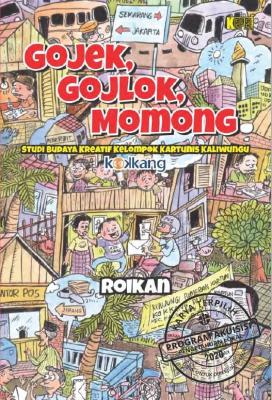
Kartun humor dan media cetak merupakan dua hal yang tidak terpisahkan. Tidak sedikit pembaca saat memegang koran memiliki ketertarikan pada halaman penuh humor: rublik kartun. Sebuah halaman yang membuat orang dapat tersenyum, tertawa lepas, bahkan merenung. Kekuatan kartun humor terletak tidak hanya pada gambar visualnya semata. Ada aspek intrinsik di dalamnya yang dapat ditelisik lebih jauh. Itulah proses kreatif, menggambar kartun tidak hanya butuh proses personal ada aspek komunal yang turut serta di dalamnya. Komunalisme kartunis dalam berkarya ditunjukan dengan munculnya berbagai kelompok/komunitas kartunis di berbagai daerah. Salah satunya Kelompok Kartunis Kaliwung (KOKKANG). Sebagai seorang kartunis, saya turut serta dalam proses menggambar sampai mengirim karya. Tidak lupa memantau perkembangan selanjutnya, apakah gambar saya dimuat atau tidak. Kerap saya temui nama KOKKANG atau Kaliwungu. Nama ini bikin iri, karena sering dimuat. Awalnya saya mengira KOKKANG adalah nama orang, berbeda dengan Kaliwungu yang saya yakini adalah nama sebuah daerah. Saya selanjutnya tahu jika di Kaliwungu, Kendal, Jawa Tengah terdapat kelompok kartun yang digdaya dalam jagad perkartunan nusantara.
Ahimsa-Putra, H.S. 2012. Strukturalisme Levi Strauss, Mitos dan Karya Sastra. Jogjakarta: Kepel Press.
Ajidarma, Seno Gumira. 2012. Antara Tawa dan Bahaya: Kartun dalam Politik Humor. Jakarta: KPG (Kepustakaan Populer Gramedia).
Alexander, Jennifer. 1998. “Women Traders in Javanese Market Places, Ethnic, Gender and Enterpreneurial Spirit”. dalam Robert Hefner W (ed). Market Cultures. Boston: Westview Press. hal. 203-223.
Atmosudiro dan Marsono. 2005. Potret Transformasi Budaya di era Global. Yogyakarta: Unit Pengkajian dan Pengembangan FIB UGM.
Barnard, Alan. 2004. History and Theory in Anthropology. UK: Cambridge University Press.
Bourdieu, Pierre. 2012. Arena Produksi Kultural: Sebuah Kajian Sosiologi Budaya. Yogyakarta: Kreasi Wacana.
Bourdieu, Pierre. 2002. “Forms of Capital”. dalam Economic Sociology. Nicole Woosley Biggart (ed), Malden Massachusetts: Blackwell Published. hal. 280-291.
Brabant, Sarah dan Linda A. Mooney. The Social Construction Of Family Life In The Sunday Comics: Race As a Consideration. Journal of Comparative Family Studies, Vol. 30. No. 1 (WINTER 1999), pp. 113-133. Published by: Dr. George Kurian.
Brunetti, Ivan. 2011. Cartooning Philosophy and Practice. New Haven and London: Yale University Press.
Coote, Jeremy F dan Anthony Shelton (eds.), 1992. Anthropology, Art, and Aesthetics Oxford: Clarendon Press.
Coyer, Kate., Tony Dowmunt, Alan Fountain. 2007. The Alternative Media Handbook. New York: Routledge.
Danandjaja, James. 1988. Antropologi Psikologi: Teori Metode dan Sejarah Perkembangannya. Jakarta: CV Rajawali.
Depdiknas. 2008. Kamus Besar Bahasa Indonesia Pusat Bahasa Edisi keempat. Jakarta: Gramedia Pustaka Utama.
Fine, Ben. 2010. Theories of Social Capital: Researchers Behaving Badly. Ney York: Pluto Press.
Flores, Toni. 1985. “The Anthropology of Aesthetic” dalam Dialectical Anthropology, Vol. 10. No. ½, Anthropology After
’84 – State of The Art, State of Society Part II (July 1985), pp, 27-41.
Gell, Alfred. 1992. ‘The Enchantment of Technology and The Technology of Enchantment.’ dalam Anthropology, Art, and
Aesthetics. Jeremy F Coote. dan Anthony Shelton (eds.), Oxford: Clarendon Press.
Gell, Alfred. 1995. “On Coote’s: Marvel of Everyday Vision” dalam Social Analysis: The International Journal of Social and
Cultural Practice, No, 38. Too Many Meaning’s: a Critique of the Anthropology of Aesthetics. (September 1995). Pp. 18-31.
Giuffre, Katherine. 2009. Collective Creativity: Art and Society in The South Pacific. Burlington: Ashgate.
Gow, Peter. 1999. “Piro Design: Painting as Meaningful Action in An Amazonian Lived World” dalam Journal of Royal
Anthropology Institute, Vol.5, No.2 (Juni 1999). Pp. 229-246.
Grenfell, Michael and Cheryl Hardy. 2007. Art rules: Pierre Bourdieu and the Visual Arts. Oxford: Berg.
Haviland, William A, et.al. 2011. Anthropology The Human Challenge: Thirteenth Edition. Belmont: Wadsworth.
Hefner, Robert W. 1998. “Introduction, Society and Morality in The New Asian Capitalism” dalam Robert Hefner W (ed). Market
Cultures. Boston: Westview Press. hal. 1-38.
Hendrowinoto, Nirwanto Ki S. 2006. Pramono Malu Sendiri. Jakarta: PT Media Creatif Indonesia (MCI).
Indarto, Kuss. 1999. Sketsa di tanah Mer(d)eka, Kumpulan Karikatur. Yogyakarta: PT Tiara Wacana.
Kuper, Adam. 1996. Pokok dan Tokoh Antropologi: Mashab Inggris Modern. Jakarta: Bhatara Niaga Media.
Kellner, Douglas. 2010. Budaya Media Cultural Studies, Identitas dan Politik: Antara Modern dan Postmodern. Yogyakarta: Jalasutra.
Koput, Kenneth W. 2010. Social Capital An Introduction to Managing Networks. UK: Edward Elger Publishing.
Laxman, R.K. 1989. “Freedom to Cartoon, Freedom to Speak” dalam Daedalus, Vol. 118. No. 4. Another India (Fall, 1989), pp. 68-91. The MIT Press on behalf of America Academy of Arts & Sciences.
Liep, John.(ed). 2001. Locating Cultural Creativity. Chippenham: Pluto Press.
Lin, Nan. 2001. Social Capital: Structural Analysis in The Social Sciences. Cambridge: Cambridge University Press.
Lindsey, Donald B. dan John Heeren. 1992. “Where The Sacred Meets the Profane: Religion in Comic Pages” dalam Review of Religious Research, Vol. 34. No. 1 (Sep., 1992), pp. 63-77. Religious Research Association, Inc.
Mander, Mary S. 1987. “Bourdieu, the Sociology of Culture and Cultural Studies: A Critique” dalam European Journal of Communication (SAGE, London, Newbury Park, Beverly Hills and New Delhi), Vol. 2 (1987), 427-53.
Maxwell, Andrew H. 1998. “Motorcyclists And Community In Post-Industrial Urban America” dalam Urban Anthropology and
Studies of Cultural Systems and World Economic Development, Vol. 27, No. 3/4 (FALL-WINTER, 1998), pp. 263-299.
Mc Cann, Gerald dan Stephen Mc Closkey (eds). 2003. From The Local to The Global: Key Issues in Development Studies.
London – Sterling: Pluto Press.
Mc Cloud, Scott. 2001. Understanding Comics: Memahami Komik. Jakarta: Kepustakaan Populer Gramedia.
Mishon, Joel dan Ed Beadwell. 2003. Cartoon Workshop: How to Create Humour. London: Collins.
Moore, Frazier H. 1988. Hubungan Masyarakat: Prinsip, Kasus dan Masalah Dua. Bandung: Remadja Karya CV.
Mc Cloud, Scott. 2001. Understanding Comics: Memahami Komik. Jakarta: KPG (Kepustakaan Populer Gramedia)
Nirwandar, Sapta. 2014. Building Wow: Indonesia Tourism and Creative Industry. Jakarta: PT Gramedia Pustaka Utama.
Peterson, Robert S. 2011. Comics, Manga, and Graphic Novels A History of Graphic Narratives. Santa Barbara, California: Praeger.
Plaza, Maria. 2006. The Function of Humour in Roman Verse Satire: Laughing and Lying. Oxford: Oxford University Press.
Provencher, Ronald. 1990. “COVERING MALAY HUMOR MAGAZINES: Satire and Parody of Malaysian Political Dilemmas” dalam Crossroads: An Interdisciplinary Journal of Southeast Asian Studies, Vol. 5, No. 2(1990), pp. 1-25
Published by: Northern Illinois University Center for Southeast Asian StudiesStable.
Purwanto, Antonius. 2013. “Modal Budaya dan Modal Sosial dalam Industri Seni Kerajinan Keramik” dalam Jurnal
Sosiologi: MASYARAKAT, Vol. 18, No. 2, Juli 2013: 233-261.
Dipublikasikan oleh: Pusat Kajian Sosiologi, Labsosio FISIP Universitas Indonesia.
Richardson, J. 1986. Handbook of Theory and Research for The Sociology of Education. Wesport, CT: Green Wood, pp 241-
Roikan. 2007. Angkutan Umum dan Gaya Hidup Metropolitan (Studi Etnografi Semiotika Kartun Benny Rachmadi dalam Seri
Lagak Jakarta Edisi Transportasi). Skripsi sarjana. Surabaya: Jurusan Antropologi Sosial, Fakultas Ilmu Sosial dan Ilmu
Politik, Universitas Airlangga.
Rothenbuhler, Eric W dan Mihai Coman (eds.)., 2005. Media Anthropology. UK: SAGE Publication.
Setiawan, Muhammad Nashir. 2002. Menakar Panji Koming: Tafsiran Komik Karya Dwi Koendoro Pada Masa Reformasi
Tahun 1998. Jakarta: Penerbit Buku Kompas.
Shahab, Yasmine Zaki. 2005. “Sistem Kekerabatan sebagai Katalisator Peran Ulama Keturunan Arab di Jakarta” dalam
Antropologi Indonesia, Vol. 29, No. 2.
Shiraishi, S.S., 2009. Pahlawan-pahlawan Belia: Keluarga Indonesia dalam Politik. Terjemahan Tim Jakarta-jakarta. Jakarta: Nalar.
Storper, Michael. 2001. “Lived Effect of Contemporary Economy: Globalization, Inequality and Consumer Society”, dalam Jen
Comaroff dan John L. Comaroff. (eds). Milennial Capitalism and The Culture of Neoliberalism. London: Duke University
Press. hal. 87-96.
Sudarmo, Darminto M. 2004. Anatomi Lelucon di Indonesia. Jakarta: Penerbit Buku Kompas.
Sunarto, Priyanto. 2005. Metafora Visual Kartun Editorial Pada Surat Kabar Jakarta 1950-1957. Disertasi Pascasarjana. Bandung: Program Studi Ilmu Seni Rupa dan Desain, Institut Teknologi Bandung.
Svasek, Maruska. 2007. Anthropology, Art and Cultural Production. London: Pluto Press.
Tabrani, Primadi. 2006. Kreativitas dan Humanitas: Sebuah Studi Tentang Peranan Kreatifitas Dalam Perikemanusiaan Manusia.
Yogyakarta: Jalasutra
Svendsen, Gert Tinggard dan Gunnar Lind Haase Svendsen (eds.). 2009. Handbook of Social Capital: The Troika of Sociology, Political Science and Economics. Cheltenham. UK: Edward Elgar.
Wijana, I Dewa Putu. 2004. Kartun, Studi Tentang Permainan Bahasa. Yogyakarta: Penerbit Ombak.
Wilson, Samuel M. dan Leighton C. Peterson. 2002. “The Anthropology of Online Communities” dalam Annual Review
of Anthropology. Vol. 31 (2002). Pp 449-467.
Winegar, Jessica. 2006. “Cultural Sovereignty in a Global Art Economy: Egyptian Cultural Policy and the New Western Interest in Art from the Middle East” dalam Cultural Anthropology, vol. 21. No. 2 (May, 2006). Pp. 173-204.
Vokey, Scott. 2000. “Inspiration for Insurrection or Harmless Humour? Class and Politics in the Editorial Cartoon of Three Toronto Newspapers during the Early 1930s” dalam Labour/Le Travail, Vol. 45 (Spring, 2000), pp. 141-170, diterbitkan oleh Canadian Committee on labour History and Athabasca University Press.
Sumber Surat Kabar
“Para Pemenang Journalis Awards.” Jawa Pos, 2 September 2014.
“Industri Kreatif Target 3 Persen PDB, Kemenkeu Kaji Insentif Fiskal.” Jawa Pos, 11 Maret 2014.
“Komunitas Seni: Pabrik Ngartun.” Kompas, 26 Maret 2007
Sumber Internet
“KOKKANG terinspirasi hadirnya Pakyo”, dalam http://tyudkartun.blogspot.com/2010/07/KOKKANG-terinspirasihadirnya-pakyo.html diakses pada tanggal 18 Juni 2014

This work is licensed under a Creative Commons Attribution-NonCommercial-ShareAlike 4.0 International License.
This book that publish in BRIN Publishing is licensed under a Creative Commons Attribution Non-commercial Share Alike 4.0 International license (CC BY-NC-SA 4.0). This license permits you to share, copy, distribute and transmit the work for your personal use and non-commercial purposes, provided you provide appropriate attribution. Derivative works and modifications must use the same license. Detailed information regarding the CC-BY-NC-SA 4.0 license is available via the link: https://creativecommons.org/licenses/by-nc-sa/4.0/
BRIN Publishing has a program named Akuisisi Pengetahuan Lokal that acquisition any of books or audiovisual content that meet our standard publication. The rights of BRIN Publishing is to disseminate and distribute all the content acquisitions for the public.
As an author you (or your employer or institution) may do the following:
All copies, print or electronic, or other use of the paper or article must include the appropriate bibliographic citation for the books