


























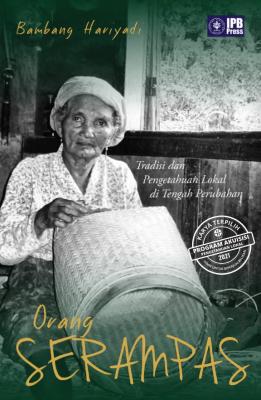
Masyarakat tradisional yang secara turun-temurun menghuni dan berinteraksi secara intensif dengan suatu sumber daya cenderung memiliki pengetahuan lokal terkait dengan sumber daya tersebut. Demikian pula halnya dengan Serampas, salah satu komunitas penduduk asli yang menempati kawasan hutan hujan tropis Sumatera, tepatnya di sekitar kawasan Taman Nasional Kerinci Sebelat. Buku ini mengupas nilai-nilai dan praktik-praktik pengelolaan sumberdaya alam yang dilakukan oleh masyarakat Serampas serta kaitannya dengan kondisi sosial budaya dan adat istiadat setempat. Beberapa konsep dan contoh pengelolaan sumberdaya alam tradisional yang disajikan dalam buku ini akan memberikan pemahaman dan apresiasi yang lebih obyektif mengenai tradisi, pengetahuan lokal, dan budaya yang dimiliki oleh berbagai kelompok masyarakat tradisional yang tersebar di berbagai daerah di seluruh Indonesia.
Gadgil M, Berkes F, Folke C. 1993. Indigenous knowledge for biodiversity conservation. Ambio. 22(2–3):151–6.
Windia W. 2002. Transformasi Sistem Irigasi Subak Bali Berlandaskan Tri Hita Karana [disertasi doktor]. Yogyakarta: Universitas Gajah Mada.
Zerner C. Through a green lens: the construction of customary environmental law and community in Indonesia’s Maluku Islands. Law & Society Review. 28(5): 1079–1122.
Berkes F. 1999. Sacred Ecology: Traditional Ecological Knowledge and Resource Management. Philadelphia: Taylor and Francis.
Alcorn JB. 1989. Process as resource: the traditional agricultural ideology of bora and huastec resource management and its implications for research. Advances in Economic Botany. 7: 63–77.
Sillitoe P. 1998. The development of indigenous knowledge: a new applied anthropology. Current Anthropology. 39(2): 223–251.
Neidel JD. 2006. The Garden of Forking Path: History, Its Erasure and Remembrance in Sumatera’s Kerinci Seblat National Park [dissertation PhD]. The Faculty of Graduate School of Yale University, 469p.
Bonatz D, Neidel JD, Tjoa-Bonatz ML. 2006. The megalithic complex of highland Jambi an archaeological perspective. Bijdragen tot de Taal-, Land –en Volkenkunde (BKI). 162(4): 490–522.
Znoj H. 2001. Heterarchy and Domination in Highland Jambi; the Contest for Community in a Matrilineal Society [thesis Habilitation]. University of Bern.
Colombijn F. 2003. The Volatile State in Southeast Asia: Evidence from Sumatera, 1600–1800. The Journal of Asian Studies. 62(2): 497–529.
Schwartz T. 1972. Dalam papernya Distributive Models of Culture in Relation to Societal Scale, Wenner-Gren Foundation for Anthropological Research Burg Wartenstein Symposium No.55, 31 Juli 8 Agutus 1972, mengelompokanya dalam rasio tatap muka (face to face ratio) yang paling rendah (1:1), di mana setiap penduduk dikenal dan mengenal penduduk yang lainya.
Marsden W. 1966. History of Sumatera: Containing an Account of the Government, Laws, Customs, and Manners of the Native Inhabitants, with a Description of the Natural Productions, and a Relation to the Ancient Political State of that Island. Kuala Lumpur, New York: Oxford University Press.
Cholif MA. 1971. Monografi Adat Ketjamatan Djangkat dan Pengaruh Islam (Customary Monograph of Jangkat and the Influence of Islam). IAIN Sultan Thaha Sjaifuddin Jambi di Sungai Penuh. 40 hal.
Ardan AS. 2008. Penggunaan tumbuhan obat oleh masyarakat desa Kubang Nan Raok (Sumatera Barat). Prosiding Seminar Nasional Etnobotani III. Denpasar-Bali, 5–6 Mei 1998.
Haan FDe. 1896. Naar Midden Sumatera in 1684. Dalam Amran R, 1981. Sumatera Barat Hingga Plakat Panjang. Jakarta: Sinar Harapan. 652 hal.
What is Orang Pendek? http://www.orangpendek.org/orangpendek/Diakses tanggal 9 Januari 2009.
Lihat Carter CA dkk. 1997. Toxicarioside A. A new cardenolide isolated from Antiaris toxicaria latex-derived dart poison. Assignment of the 1H- and 13C-NMR shifts for an antiarigenin aglycone. Tetrahedron. 53(40): 13557–13566
Jiang MM dkk. 2008. Cardenolides from Antiaris toxicaria as potent selective nur77 modulators. Chem. Pharm. Bull. 56(7): 1005–1008.
Arifin Z. 2002. Peranan Tokoh Tokoh Masyarakat dalam Pelestarian Hutan TNKS: Studi di Desa Renah Kemumu dan Desa Tanjung Kasri, Kecamatan Jangkat, Kabupaten Merangin Propinsi Jambi. Final Report. Component A: Park Management Kerinci Seblat Integrated Conservation Development Project, 56 hal.
Hariyadi B. 2010. Serampas Traditional Natural Resource Management: Encounter the Changes. Germany: VDM Verlag Dr. Müller Aktiengesellschaft & Co. KG.
Reid A. 1985. From betel-chewing to tobaco-smoking in Indonesia. Journal of Asian Studies XLIV(3): 529–547.
Christensen H. 2002. Ethnobotany of the Iban and the Kelabit. Denmark: A joint Publication of Forest Department Sarawak, Malaysia, NEPCon, Denmark, and University of Aarhaus. 381 hal.
Watson. 1992. Kinship, Property and Inheritance in Kerinci, Central Sumatera. CSAC Monographs 4 South-East Asia Series. Center for Social Anthropology and Computing and the Center of South-East Asian Studies. University of Kent at Canterbury. 254 hal.
Tomlinson M. 2004. Perpetual lament: kava-drinking, christianity and sensation of historical decline in Fiji. The Journal of the Royal Anthropological Institute. 10(3): 653–673.
Zed M. 1983. Melayu Kopi Daun: Eksploitasi Kolonial Belanda dalam Sistem Tanaman Paksa Kopi di Minangkabau Sumatera Barat. Jakarta: Pasacasarjana Universitas Indonesia.
Sardjono MA, Samsoedi I. 2001. Traditional Knowledge and Practice of Biodiversity Conservation: The Benuaq Dayak Community of East Kalimantan, Indonesia. Dalam Colfer CJP, Byron Y, eds. People Managing Forest: The Link between Human Well-being and Sustainability. Resource for the Future, Washington D.C. and Center for International Forestry Research, Bogor Indonesia. Hal. 116–134.
Heriyanto NM, Garsetiasih R. 2005. Kajian Ekologi Pohon Burahol (Stelechocarpus burahol) di Taman Nasional Meru Betiri, Jawa Timur. Buletin Plasma Nutfah. 11(2): 65–72.
Etkin NL. 1994. The Cull of the Wild. Dalam Etkin NL, ed. Eating on the Wild Side: The Pharmacologic, Ecologic, and Social Implications of Using Noncultigens. Tucson: University of Arizona Press. Hal.1–24.
Anas A. 2006. Studi Etnobotani Tumbuhan Obat di Desa Renah Kemumu Kecamatan Jangkat [skirpsi]. Fakultas Keguruan dan Ilmu Pendidikan Universitas Jambi.
Hsieh C, Fang H, Lina W. 2008. Inhibitory effect of Solanum nigrum on thioacetamide-induced liver fibrosis in mice. Journal of Ethnopharmacology. 119: 117–121.
Chen C dkk. 2008. Toona sinensis Roem tender leaf extract inhibits SARS coronavirus replication. Journal of Ethnopharmacology. 120: 108–111.
Kukushkin S. 2004. Hikayat Negeri Jambi: the Structure and Sources of Nineteenth-Century Malay Historical Work. Indonesia and the Malay World. 32(94): 53–61.
Masjkuri. 1985. Sultan Thaha Syaifuddin. Direktorat Sejarah dan Nilai Tradisional. Jakarta: Departemen Pendidikan dan Kebudayaan. 117 hal.
Wolters OW. 1967. Early Indonesian Commerce: A Study of the Origins of Srivijaya. Ithaca: Cornel University Press.
Sari NgSDPR. 1982. Undang-Undang, Piagam, dan Kisah Negeri Jambi. Jakarta: Proyek Penerbitan Buku Sastra Indonesia dan Daerah, Departemen Pendidikan dan Kebudayaan. 131p.
Drakard J. 1999. A Kingdom of Words: Language and Power in Sumatera. Kuala Lumpur and New York: Oxford University Press.
McCarthy JF. 2005. Between Adat and State: Institutional Arrangement on Sumatera’s Forest Frontier. Human Ecology. 33(1): 57–82.
Kipp RS, Rodgers S. Eds. 1987. Indonesian Religions in Transition. Tucson: University of Arizona Press.
McCarthy JF. 2000. The Changing Regime: Forest Property and Reformasi in Indonesia. Development and Change. 31: 91–129.
Iskandar Z. 1984. Tambo Sakti Alam Kerinci. Proyek Penebitan Buku Satra Indonesia dan Daerah. Jakarta: Departemen Pendidikan dan Kebudayaan. 204 hal.
Raharjo DY, Oktavia V, Azmaiyanti Y. 2004. Orbolan Lapau, Obrolan Rakyat: Sebuah Potret Pergulatan Kembali ke Nagari. Bogor: Studio Kendil.
Burgers P. 2004. Resource Management under Stressed Livelihood Conditions; Changing Livelihood and Management Practices in the Bufferzone of the Kerinci Seblat National Park, Kerinci District, Sumatera. Faculty of Geoscience, Utrecht University. 249 hal.
Anonim. Tanpa tahun. Parak, Mutiara di Tepi Danau. Warsi dan Ford Foundation.
Znoj H. 1998. Sons versus nephews: a highland Jambi alliance at war with the British East India Company, ca 1800. Indonesia. 65: 97–121.
Kahn JS. 1993. Constituting the Minangkabau: Peasants, Culture, and Modernity in Colonial Indonesia. Oxford: Berg Publisher Inc.
von Benda-Beckmann von F, von Benda-Beckmann K. 1985. Transformation and Change in Minangkabau. Dalam Thomas L, von Benda-Beckmann F, eds. Change and Continuity in Minangkabau. Ohio University Monographs in International Studies, Athens. Hal. 235–278.
Warren C. 1993. Adat and Dinas: Baliness Communities in the Indonesian State. Kuala Lumpur: Oxford University Press.
Peluso N, Vandergeest P. 2001. Genealogies of the Political Forest and Customary Right in Indonesia, Malaysia, and Thailand. The Journal of Asian Studies. 60(3): 761–812. (e) McCarthy JF. 2005. Between Adat and State: Institutional Arrangement on Sumatera’s Forest Frontier. Human Ecology. 33(1): 57–82.
Colombijn F. 2005. Dried-Up Dragon’s Blood and Swarms of Bee’s Nest Collectors; Non-Timber Forest Products in Sumatera 1600–1870. Dalam Boomgaard P, Henley D, Osseweijer M, eds. Muddied Waters Historical and Contemporary Perspectives on Management of Forests and Fisheries in Island Southeast Asia. KITLV Press Leiden. Hal. 259–278.
Zakaria Y. 2000. Abdi Tandeh: Masyarakat Desa di Bawah Rejim Orde Baru. Jakarta: ELSAM.
Antlöv H. 2003. Village Government and Rural Development in Indonesia: The New Democratic Framework. Bulletin of Indonesian Economic Studies. 39(2): 193–214.
Adhuri DS. 2002. Between Village and Marga, A choice of Structure: The Local Elites’ Behaviors in Lahat Regency, South Sumatera. Anthropology Indonesia. Special Volume. Hal. 44–55.
Sandjaja UP. 1999. Negara, Masyarakat Adat, dan Demokrasi: Beberapa Telaah Ekploratif tentang Hubungan Negara dengan Masyarakat Adat. Dalam Sandra K, Candra G, eds. Menggugat Posisi Masyarakat Adat terhadap Negara. Panitia Bersama Sarasehan dan Kongres Masyarakat Adat Nusantara 1999 dengan Lembaga Studi Pers dan Pembangunan (LSPP). Hal. 166–174.
Adimihardja K. 1999. Hak Sosial Budaya Masyarakat Adat. Dalam Kartika S, Gautama C, eds. Menggugat posisi masyarakat adat terhadap Negara. Panitia Bersama Sarasehan dan Kongres Masyarakat Adat Nusantara 1999 dengan Lembaga Studi Pers dan Pembangunan (LSPP). Hal. 27–30.
Soedjito H. 2005. Apo Kayan: Sebongkah Sorga di Tanah Kenyah. Bogor: Himpunan Ekologi Indonesia. 335 hlm.
Nair PK Ramachandran. 1993. An Introduction to Agroforestry. Kluwer Academic Press–ICRAF, London, 499 hlm., Huxley, P. 1999. Tropical Agroforestry. Blackwell Science, Oxford, 371 hlm.
The Spice house. Spice Information: Cinnamon. http://www. thespicehouse.com/spices-by-category/cinnamon, di akses 30 Oktober 2008.
Stelle DH, Thornburg MJ, Stanley JS, Miller R, Brooke R, Cushman JR, Cruzan G. 1994. Determination of styrene in selected foods. Journal of Agricultural and Food Chemistry. 42(8): 1661–1665.

This work is licensed under a Creative Commons Attribution-NonCommercial-ShareAlike 4.0 International License.
This book that publish in BRIN Publishing is licensed under a Creative Commons Attribution Non-commercial Share Alike 4.0 International license (CC BY-NC-SA 4.0). This license permits you to share, copy, distribute and transmit the work for your personal use and non-commercial purposes, provided you provide appropriate attribution. Derivative works and modifications must use the same license. Detailed information regarding the CC-BY-NC-SA 4.0 license is available via the link: https://creativecommons.org/licenses/by-nc-sa/4.0/
BRIN Publishing has a program named Akuisisi Pengetahuan Lokal that acquisition any of books or audiovisual content that meet our standard publication. The rights of BRIN Publishing is to disseminate and distribute all the content acquisitions for the public.
As an author you (or your employer or institution) may do the following:
All copies, print or electronic, or other use of the paper or article must include the appropriate bibliographic citation for the books